
Overview
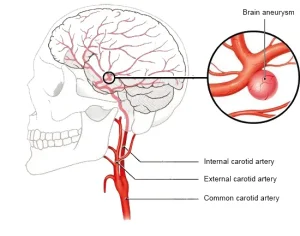
Diagnosis of Brain Aneurysm
Screening and diagnosis involve imaging tests and procedures to detect aneurysms or bleeding in the brain.
-
CT scan: A specialized X-ray producing 2D slices of the brain. A CT angiogram adds contrast dye to visualize blood flow and detect aneurysms.
-
Lumbar puncture (spinal tap): Tests cerebrospinal fluid for red blood cells if a subarachnoid hemorrhage is suspected but CT is inconclusive.
-
MRI: Uses magnetic fields and radio waves to create 2D or 3D images of the brain. MR angiography captures detailed images of brain arteries to detect aneurysm size, shape, and location.
-
Cerebral angiogram: A catheter is inserted into an artery (usually groin or wrist), guided to brain arteries, and injected with dye. X-rays reveal aneurysm details and is used when other tests are inconclusive.
Screening for high-risk individuals is considered if there is:
-
Family history of brain aneurysms or hemorrhagic stroke.
-
Conditions that increase risk, such as polycystic kidney disease, coarctation of the aorta, or Ehlers-Danlos syndrome.
Prognosis factors include age, health, aneurysm size and location, bleeding severity, and timeliness of medical care. Roughly 25% of people with ruptured aneurysms die within 24 hours, and another 25% die within six months due to complications.
Treatment of Brain Aneurysm
Treatment depends on rupture status, aneurysm characteristics, and overall health.
Surgical Treatment
-
Surgical clipping: A portion of the skull is removed to access the aneurysm. A metal clip is placed at the aneurysm neck to stop blood flow. Recovery: 4–6 weeks; hospital stay varies based on rupture status.
-
Endovascular coiling: A catheter threads coils into the aneurysm to clot blood and prevent rupture. Stents may hold coils in place. Risks include bleeding, loss of blood flow, and possible aneurysm recurrence.
-
Flow diversion: A stent diverts blood flow away from the aneurysm, reducing rupture risk and allowing healing. Often used for large or hard-to-treat aneurysms.
Other Procedures for Ruptured Aneurysms
-
Angioplasty: Expands narrowed brain vessels caused by vasospasm, preventing stroke.
-
Ventricular or lumbar draining catheters / shunt surgery: Reduce brain pressure from cerebrospinal fluid buildup.
Medicines
-
Pain relievers: Such as acetaminophen for headache management.
-
Calcium channel blockers: Reduce vasospasm risk; nimodipine helps prevent delayed brain injury after rupture.
-
Vasodilators: Open narrowed blood vessels to maintain blood flow and prevent stroke.
-
Anti-seizure medicines: Used if seizures occur post-rupture.
Rehabilitation
-
Physical, speech, and occupational therapy may be needed to recover skills after brain damage from subarachnoid hemorrhage.
Treating Unruptured Brain Aneurysms
-
Options include surgical clipping, endovascular coiling, or flow diversion.
-
Decisions are based on aneurysm size, location, and rupture risk.
-
Neurologists and neurosurgeons or interventional neuroradiologists collaborate to weigh risks versus benefits of treatment.
Advertisement
