
Overview
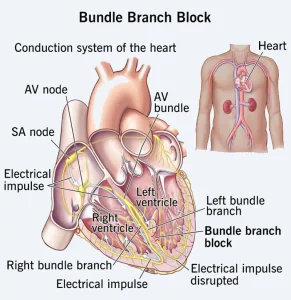
Bundle Branch Block (BBB) – Diagnosis, Symptoms & Treatment
Bundle branch block (BBB) is a heart condition where the electrical signals that control the heartbeat are delayed or blocked along the heart’s right or left bundle branches. While some people experience no symptoms, others may need medical evaluation and treatment depending on the underlying heart condition.
Symptoms of Bundle Branch Block
Many people with right bundle branch block (RBBB) have no noticeable symptoms.
Left bundle branch block (LBBB) may indicate an underlying heart problem and sometimes causes:
-
Fainting (syncope)
-
Palpitations or irregular heartbeat
-
Shortness of breath or fatigue
Diagnosis of Bundle Branch Block
A healthcare professional may diagnose BBB using a combination of medical history, physical examination, and heart tests. Key diagnostic tests include:
1. Electrocardiogram (ECG or EKG)
-
A quick, painless test that records the heart’s electrical activity.
-
Detects which side of the heart is affected and identifies the presence of a bundle branch block.
2. Echocardiogram
-
Uses sound waves to create detailed images of the heart and valves.
-
Evaluates heart structure, muscle thickness, and potential causes of the bundle branch block.
Other tests may be recommended if underlying heart disease or heart failure is suspected.
Treatment for Bundle Branch Block
Treatment depends on symptoms and any associated heart conditions. Many people with BBB, especially RBBB, may not require treatment.
Medications
-
Used only if an underlying heart condition is present, such as:
-
High blood pressure (hypertension)
-
Heart failure
-
-
Helps manage symptoms and reduce strain on the heart.
Surgical and Device-Based Treatments
-
Pacemaker implantation: Recommended for people with BBB who experience fainting or dangerous arrhythmias. A pacemaker sends electrical impulses to maintain a regular heartbeat.
-
Cardiac resynchronization therapy (CRT): Also called biventricular pacing, this treatment is for patients with low heart-pumping function. A CRT device uses three wires to synchronize the heart’s chambers, improving heart efficiency and contraction.
Outlook and Management
-
Many people with RBBB live normal lives without treatment.
-
People with LBBB require careful monitoring and management of heart disease risk factors.
-
Regular follow-ups with a cardiologist help prevent complications and ensure the heart rhythm stays stable.
Early diagnosis and proper management of bundle branch block can improve heart function, prevent complications, and enhance quality of life.
Advertisement
