
Overview
Diagnosis
To diagnose C. difficile infection, healthcare professionals evaluate your medical history, symptoms, and laboratory results. Since diarrhea can be caused by various conditions, confirming a C. difficile infection (CDI) requires specific testing.
Common diagnostic steps include:
-
Stool tests:
These are the primary tests for diagnosing C. difficile. A stool sample is checked for toxins produced by the bacteria or for the bacteria’s genetic material. Common types include:-
Enzyme immunoassay (EIA): Detects C. difficile toxins quickly but may miss some cases.
-
Polymerase chain reaction (PCR): A sensitive test that identifies the toxin-producing genes.
-
Glutamate dehydrogenase (GDH) test: Often combined with other tests for accuracy.
-
-
Colonoscopy or sigmoidoscopy:
In rare cases, a doctor may use a flexible tube with a camera to look inside the colon for inflammation or raised, yellowish patches (pseudomembranes) caused by C. difficile. -
Imaging tests:
If severe symptoms are present, such as abdominal pain or swelling, imaging like CT scans may be done to check for complications such as toxic megacolon or bowel perforation.
Treatment
Treatment for C. difficile infection focuses on restoring gut health, stopping infection spread, and preventing recurrence. The severity of your symptoms and whether this is your first infection determine the best treatment approach.
Main treatment options include:
-
Stopping the triggering antibiotic:
If your infection began while taking antibiotics, your doctor will usually stop or switch the medicine that caused the imbalance in gut bacteria. -
Antibiotic therapy for C. difficile:
Paradoxically, antibiotics are used to treat this bacterial infection. Commonly prescribed options include:-
Vancomycin (Vancocin HCL, Firvanq)
-
Fidaxomicin (Dificid)
-
Metronidazole (Flagyl) – used in mild cases when other options are unavailable.
-
-
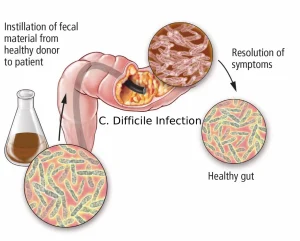
Fecal microbiota transplantation (FMT):
If the infection recurs multiple times, FMT may be recommended. This treatment transfers stool from a healthy donor into your colon to restore the natural balance of bacteria. -
Surgery:
In rare, life-threatening cases—such as severe intestinal damage—surgery may be needed to remove the affected part of the colon.
Self-Care and Prevention
C. difficile infections can recur, so prevention and self-care are important.
Helpful prevention tips:
-
Use antibiotics only when prescribed. Unnecessary antibiotic use can disrupt healthy gut bacteria.
-
Practice good hand hygiene. Wash hands thoroughly with soap and water after using the bathroom and before eating.
-
Clean surfaces regularly. Use disinfectants that contain bleach, especially in bathrooms.
-
Avoid unnecessary stomach acid reducers. Medicines like proton pump inhibitors may increase the risk of infection.
Key Takeaway
C. difficile infection can cause serious diarrhea and colon inflammation but is treatable with the right antibiotics and preventive care. Early diagnosis, responsible antibiotic use, and maintaining gut health are essential for full recovery and preventing recurrence.
Advertisement
