
Overview
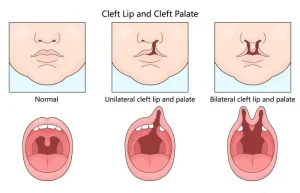
Prenatal ultrasound can diagnose most clefts of the lip because these clefts cause physical changes in the fetus’s face. Isolated cleft palate (with no cleft lip present) is harder to detect this way. Only 7% of these appear on a prenatal ultrasound.
If an ultrasound doesn’t detect a cleft before birth, a physical exam of the mouth, nose and palate can diagnose cleft lip or cleft palate after birth.
In some cases, your provider may recommend amniocentesis to check for associated genetic conditions. Amniocentesis is a procedure to remove amniotic fluid from the amniotic sac.
Can you detect cleft lip before birth?
Most healthcare providers detect cleft lip at your 20-week ultrasound (anatomy scan), which occurs between 18 and 22 weeks of pregnancy. Providers may discover it as early as 12 weeks. It’s more challenging to detect cleft palate on an ultrasound.
Advertisement
