
Overview
Diagnosis
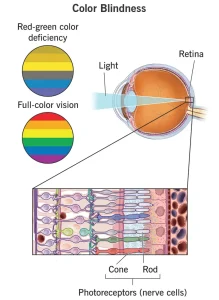
If you have difficulty seeing certain colors, an eye care professional can perform specific tests to identify a color vision deficiency. The evaluation usually includes a comprehensive eye exam and special picture tests made of colored dots that form numbers or shapes in contrasting colors.
If you have a color vision deficiency, it may be difficult or impossible to recognize certain patterns or numbers in these dot-based images.
Treatment
There are no treatments for most types of color vision problems unless they result from medication use or an underlying eye condition. If color vision loss is linked to a medicine or disease, stopping the medication or treating the condition may improve color perception.
Wearing a colored filter over eyeglasses or using tinted contact lenses may help enhance contrast between confusing colors. However, these options do not restore normal color vision.
Potential Future Treatments
Researchers are studying gene replacement techniques that may correct certain rare retinal disorders causing color deficiency. One such therapy has been approved for Leber congenital amaurosis, a rare inherited retinal condition. Similar treatments may become available in the future as research progresses.
Lifestyle and Home Remedies
You can make daily tasks easier by using practical strategies:
-
Memorize the order of colors on important items, such as traffic lights.
-
Label clothing or objects to identify colors accurately. Ask someone with normal color vision to help you sort and label items.
-
Organize your wardrobe so that matching colors are stored together.
-
Use mobile apps or devices that can identify and name colors for you.
Preparing for Your Appointment
You can start by consulting your primary care provider or make an appointment directly with an eye specialist such as an ophthalmologist or optometrist. Preparing questions beforehand can help you get the most from your visit.
Questions you may want to ask include:
-
How might having a color vision deficiency affect my daily life?
-
Will it impact my current or future job options?
-
Are there treatments or aids available for color blindness?
-
Do you have brochures or websites to learn more about this condition?
-
Are there glasses or contact lenses that could help me see colors better?
What to Expect from Your Doctor
Your doctor will ask questions to understand your condition better, such as:
-
When did you first notice problems seeing certain colors?
-
Is one eye affected or both?
-
Does anyone in your family have color blindness?
-
Do you have any medical conditions?
-
Are you exposed to chemicals at work?
-
Are you currently taking any medications or supplements?
Advertisement
