
Overview
Diagnosis
The gold standard for confirming Creutzfeldt-Jakob disease, also known as CJD, is a brain biopsy or an autopsy performed after death. However, healthcare professionals can often make an accurate diagnosis before death through medical history, neurological exams, and specific diagnostic tests.
-
Neurological exam
A healthcare provider checks for neurological signs such as muscle twitching, spasms, reflex changes, coordination problems, vision issues, or blindness. -
Electroencephalogram (EEG)
An EEG measures the brain’s electrical activity using electrodes placed on the scalp. People with CJD or its variants often show abnormal brain wave patterns not typical of other disorders. -
Magnetic resonance imaging (MRI)
MRI scans produce detailed images of the brain using magnetic fields and radio waves. They help identify distinctive brain changes seen in CJD and rule out other neurological diseases. -
Spinal fluid tests (lumbar puncture)
In this test, a small amount of spinal fluid is removed for analysis. It helps rule out other causes of similar symptoms and detect proteins that suggest CJD or its variant form. -
RT-QuIC test (real-time quaking-induced conversion)
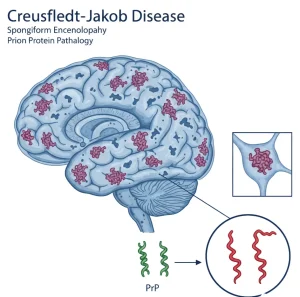
This modern test identifies abnormal prion proteins in the spinal fluid. It allows doctors to diagnose CJD before death, unlike older diagnostic methods that required an autopsy.
Treatment
There is currently no cure for Creutzfeldt-Jakob disease or its variants. Medications tested so far have not shown lasting benefits. Treatment focuses on relieving symptoms and ensuring the patient’s comfort.
-
Symptom management
Medicines may help ease pain, anxiety, or muscle stiffness. Sedatives can help with restlessness and agitation. -
Supportive and palliative care
The goal of care is to maintain comfort, dignity, and emotional stability. Palliative care teams often work closely with families to provide both physical and emotional support.
Preparing for your appointment
People with suspected CJD usually begin with their primary doctor and may be referred to a neurologist. Preparation can make the most of your visit.
Steps you can take:
-
Write down all symptoms, even those that seem unrelated.
-
Include recent life events or major stressors.
-
List all medicines, vitamins, and supplements.
-
Bring a family member or friend for support.
-
Prepare a list of questions such as:
-
What might be causing these symptoms?
-
What tests will confirm the diagnosis?
-
Are there any treatments or therapies that can help?
-
Should I make any lifestyle changes?
-
Are there specialists I should see?
-
What support resources are available?
-
What to expect from your doctor
Your healthcare provider may ask detailed questions to help with diagnosis, such as:
-
When did your symptoms begin?
-
Are they constant or do they come and go?
-
How severe are they?
-
What seems to make them better or worse?
-
Has anyone in your family had Creutzfeldt-Jakob disease?
-
Have you lived or traveled outside the country for long periods?
Living with Creutzfeldt-Jakob disease
Living with CJD can be emotionally and physically overwhelming for both the patient and their family. While treatment focuses on comfort, support from healthcare teams, counselors, and community resources plays an important role.
-
Emotional support
Talking with mental health professionals, joining support groups, and connecting with others facing similar challenges can help reduce anxiety and isolation. Families may benefit from counseling to cope with emotional strain. -
Caregiving
As the disease progresses, people often need full-time assistance. Caregivers should work closely with healthcare providers to manage symptoms, ensure comfort, and prevent complications such as infections or bedsores. -
Planning ahead
Discuss care preferences early, including end-of-life decisions. Palliative and hospice services provide compassionate care focused on quality of life, dignity, and family support. -
Community resources
National organizations such as the Creutzfeldt-Jakob Disease Foundation offer education, counseling, and support networks for families and caregivers.
Advertisement
