
Overview
Diagnosis
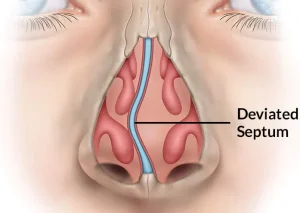
To diagnose a deviated septum, a healthcare professional performs a physical exam. This involves looking inside the nose using a bright light and sometimes using a tool to gently spread open the nostrils. If a deeper view is needed, a long, tube-shaped scope with a bright light at the tip can be used to examine the farther parts of the nasal passage.
Treatment
A deviated septum that causes noticeable symptoms is treated with surgery, which is the only way to correct the condition. If the deviation does not cause symptoms, treatment is not necessary.
If allergies or sinus issues worsen symptoms, a healthcare professional may recommend medications such as:
-
Decongestants
-
Antihistamines
-
Nasal steroid sprays
These can help manage symptoms but do not correct the septum itself.
Surgical repair
People who continue to experience symptoms despite using medicines may consider surgery, known as septoplasty.
During septoplasty, the surgeon straightens the nasal septum and repositions it to the center of the nose. This often involves trimming, repositioning, or replacing parts of the septum to improve airflow and balance between the nostrils.
Reshaping the nose
Sometimes, surgery to reshape the nose, called rhinoplasty, is performed at the same time as septoplasty. Rhinoplasty changes the bone and cartilage of the nose to alter its shape, size, or both. This combination procedure can improve both breathing and appearance.
Preparing for your appointment
You may begin by consulting your family healthcare provider, but often you’ll be referred to an ear, nose, and throat (ENT) specialist for further evaluation and treatment.
Preparing questions in advance and being ready to discuss your symptoms helps make the most of your appointment.
Questions your healthcare professional might ask
-
How long have you had a blocked nose?
-
How often do you notice the blockage?
-
Is one side of the nose more difficult to breathe through?
-
Is the blockage mild, moderate, or severe?
-
Have you ever injured your nose?
-
Do you have nasal allergies?
-
Have you lost some of your ability to smell?
-
Do you suffer from sinus infections?
-
Do you experience nosebleeds?
-
What makes the blockage worse or better?
-
What medications have you tried or are currently taking?
-
Does decongestant spray help, and how often do you use it?
-
Do nasal adhesive strips improve your breathing?
-
Is your nasal blockage worse when lying down?
-
Have you had previous nasal surgery?
Questions you might ask your doctor
-
What is likely causing my symptoms?
-
What treatment do you recommend?
-
Are there non-surgical options I could try first?
-
How can I best manage this condition alongside other health issues?
-
Do I need to restrict any activities?
-
Should I see a specialist or consider surgery?
Make sure to ask any other questions you have about your condition or treatment options during your appointment.
Advertisement
