
Overview
Diagnosis
To identify the cause of dry eyes, your eye care specialist may use a variety of tests and procedures. These help evaluate both the quantity and quality of your tears and the overall health of your eyes.
A comprehensive eye exam is often the first step. This includes a detailed review of your general health and eye health to understand potential factors contributing to dryness.
Tests to measure tear volume
One common test is the Schirmer tear test, where blotting strips of paper are placed under the lower eyelids. After five minutes, your specialist measures how much of each strip has been soaked by tears.
Another option is the phenol red thread test. In this test, a thread with pH-sensitive dye is placed over the lower eyelid for 15 seconds. The amount of dye color change indicates tear volume.
Tests to determine tear quality
To assess tear quality, special dyes in eye drops may be used. These dyes highlight staining patterns on the cornea and help measure how quickly tears evaporate.
Tear osmolarity test
This test evaluates the concentration of particles and water in your tears. People with dry eye disease usually have a higher concentration of particles due to reduced water content.
Tear sample analysis
Tear samples can be examined for specific markers of dry eye disease, such as elevated matrix metalloproteinase-9 or decreased lactoferrin levels.
Treatment
Treatment for dry eyes depends on the underlying cause and the severity of symptoms. For most people with mild or occasional dryness, regular use of nonprescription artificial tears may be enough. For persistent or severe cases, your eye care specialist may recommend additional therapies.
Treatment aims to address underlying causes, improve tear quality, or prevent tears from draining away too quickly.
Punctal plugs
Punctal plugs are tiny silicone inserts used to block tear drainage openings in the eyelids. By closing the punctum, these plugs help retain both natural tears and artificial tears for longer moisture retention.
Treating underlying causes
Addressing the root cause can help relieve dry eyes. For example:
-
If a medication causes dryness, your specialist may suggest an alternative.
-
If an eyelid problem such as ectropion is present, surgical correction by an oculoplastic surgeon may be needed.
Medications
Prescription medicines used to treat dry eyes include:
-
Medicines to reduce eyelid inflammation, often antibiotics taken orally or used as eye drops or ointments.
-
Eye drops to control corneal inflammation, such as cyclosporine (Restasis) or corticosteroid drops.
-
Eye inserts like hydroxypropyl cellulose (Lacrisert) that slowly dissolve and release lubricating substances.
-
Tear-stimulating medicines, known as cholinergics (pilocarpine, cevimeline), available as pills, gels, or eye drops.
-
Eye drops made from your own blood (autologous serum drops) for severe cases unresponsive to other treatments.
-
A nasal spray called varenicline (Tyrvaya), approved by the FDA, which stimulates natural tear production.
Other procedures
Several procedures may help reduce symptoms or improve tear retention:
-
Closing tear ducts to reduce tear loss using silicone plugs or thermal cautery for a more permanent solution.
-
Using special contact lenses, such as scleral or bandage lenses, to retain moisture and protect the eye surface.
-
Unblocking oil glands through warm compresses, eye masks, or thermal pulsation devices.
-
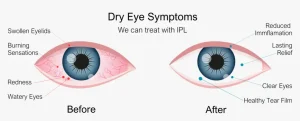
Light therapy followed by eyelid massage (intense pulsed light therapy) to improve gland function.
Self care
Self-care plays a major role in managing dry eyes. Regular eyelid hygiene and the use of lubricating eye drops can help prevent discomfort and maintain eye health.
Selecting nonprescription products
When choosing eye products:
-
Preservative drops can be used up to four times daily; nonpreservative drops are safer for more frequent use.
-
Ointments provide longer relief but may blur vision, making them ideal for nighttime use.
-
Avoid drops that claim to reduce redness, as overuse can worsen irritation.
Washing your eyelids
For people with eyelid inflammation such as blepharitis:
-
Apply a warm washcloth to your eyes for about five minutes to loosen debris.
-
Use a mild soap or baby shampoo on clean fingertips to gently massage the eyelid base, then rinse thoroughly.
Alternative medicine
Some alternative approaches may provide additional relief:
-
Fatty acids like omega-3 supplements or foods such as salmon, flaxseed, and sardines.
-
Castor oil eye drops to reduce tear evaporation.
-
Acupuncture, which may improve symptoms in certain individuals.
Preparing for your appointment
You may start with your family healthcare provider and be referred to an ophthalmologist. To make the most of your visit:
-
List your symptoms and note when they began.
-
Include personal health details and life changes.
-
Bring a list of all medications, supplements, and vitamins.
-
Prepare questions such as:
-
What is the likely cause of my dry eyes?
-
What are my treatment options?
-
Are there side effects or alternatives?
-
Do I need follow-up care?
-
What to expect
Your doctor may ask about your symptoms, family history, and medication use. Be prepared to describe when symptoms occur, how severe they are, and what treatments you have already tried.
In the meantime
Until your appointment, you can relieve symptoms with lubricating artificial tears. Avoid redness-reducing drops, as they may increase irritation with prolonged use.
Advertisement
