
Overview
Diagnosis
Diagnosing dwarfism usually involves several steps to understand your child’s growth and identify any underlying condition. A pediatrician may refer your child to specialists in endocrinology or genetics. In some cases, disproportionate dwarfism can be suspected during prenatal ultrasound if the limbs appear significantly shorter than the trunk.
Diagnostic tests may include:
-
Measurements: During regular checkups, height, weight, and head size are measured and plotted on growth charts. These charts help identify growth patterns that differ from typical development, such as delayed growth or an unusually large head in proportion to the body. If irregular growth patterns are found, measurements may be taken more frequently.
-
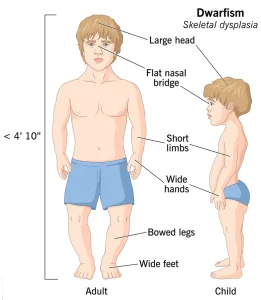
Appearance: Distinct facial and skeletal features often help identify specific dwarfism conditions. A geneticist or pediatrician may use physical appearance to narrow down the diagnosis.
-
Imaging technology: X-rays and MRI scans can detect skeletal differences, delayed bone development, or abnormalities in the pituitary gland and hypothalamus.
-
Genetic tests: Genetic testing helps confirm the diagnosis and determine the specific gene mutation involved. This information is valuable for treatment planning and family counseling. For example, if Turner syndrome is suspected, chromosome testing is used.
-
Family history: Gathering information about the height and growth patterns of relatives helps determine whether short stature runs in the family.
-
Hormone tests: Blood tests may be used to measure growth hormone or other hormone levels critical to development.
Healthcare team
Dwarfism can involve complications affecting growth, development, and various organ systems. Because of this, several specialists may be involved in diagnosis and treatment. Your child’s pediatrician often coordinates care among specialists such as:
-
Endocrinologist (hormone specialist)
-
Orthopedist (skeletal specialist)
-
Medical geneticist
-
Otolaryngologist (ENT specialist)
-
Cardiologist
-
Ophthalmologist
-
Neurologist
-
Orthodontist
-
Developmental or occupational therapist
-
Psychologist or psychiatrist
This multidisciplinary approach ensures comprehensive care tailored to your child’s needs.
Treatment
The main goal of treatment is to support independence, function, and quality of life rather than significantly increasing height. Most therapies focus on managing complications and improving growth potential where possible.
Medications
In 2021, the U.S. Food and Drug Administration (FDA) approved vosoritide (Voxzogo) for children aged 5 years and older with achondroplasia and open growth plates. It’s given as a daily injection and can improve growth by about 0.6 inches (1.6 cm) per year on average. Discuss potential benefits and side effects with your doctor or geneticist.
Other medications for dwarfism-related growth disorders are currently being studied.
Hormone therapy
Children with dwarfism caused by growth hormone deficiency may benefit from daily injections of synthetic growth hormone. Treatment may continue for several years until adult height is reached, often within the typical height range for the family.
Girls with Turner syndrome often need estrogen and other hormone therapies to begin puberty and support bone and sexual development. Estrogen replacement therapy usually continues until the average age of menopause.
Growth hormone treatment does not significantly increase adult height in children with achondroplasia.
Surgery
Surgical options may help correct or prevent complications associated with disproportionate dwarfism. Procedures may include:
-
Correcting abnormal bone growth direction
-
Stabilizing or reshaping the spine
-
Expanding vertebral openings to relieve spinal cord pressure
-
Placing a shunt to drain excess brain fluid in cases of hydrocephalus
Some individuals choose limb-lengthening surgery to increase height. This is a complex and controversial procedure due to the potential for pain, emotional stress, and multiple surgeries. It is generally recommended to wait until the individual is mature enough to make an informed decision.
Ongoing health care
Lifelong medical care is essential for managing complications and maintaining quality of life. Regular checkups help monitor issues such as spinal stenosis, ear infections, or sleep apnea.
Adults with dwarfism should continue seeing healthcare professionals familiar with the condition for ongoing management of symptoms and complications throughout life.
Advertisement
