
Overview
Diagnosis
Diagnosis of embryonal tumors involves a detailed review of your child’s medical history, symptoms, and neurological health. Various tests and procedures are used to confirm the presence and type of tumor.
Neurological exam: This test evaluates your child’s vision, hearing, reflexes, balance, coordination, and strength to identify which areas of the brain may be affected by the tumor.
Imaging tests: Imaging plays a crucial role in detecting brain tumors. CT scans and MRI scans provide detailed images of the brain’s structure, showing the tumor’s size, shape, and position. Advanced imaging methods like perfusion MRI and magnetic resonance spectroscopy can help determine how the tumor is behaving and affecting nearby tissues.
Removal of tissue for testing (biopsy): A biopsy involves taking a small sample of tumor tissue for laboratory analysis. This may occur during surgery to remove the tumor or beforehand if the imaging results are unclear. Examining the tissue under a microscope helps confirm the tumor type and plan the most effective treatment.
Removal of cerebrospinal fluid for testing (spinal tap): A lumbar puncture involves inserting a thin needle between the bones of the lower spine to draw fluid surrounding the spinal cord. This cerebrospinal fluid is tested for the presence of tumor cells or abnormalities. The test is performed only after managing brain pressure or removing the tumor to ensure safety.
Treatment
Treatment for embryonal tumors typically starts with surgery and may include additional therapies to reduce the risk of recurrence. The treatment approach depends on the child’s age, tumor type, and tumor location.
Surgery to relieve fluid buildup (hydrocephalus): Tumors can block the normal flow of brain fluid, leading to pressure buildup. Neurosurgeons may create a pathway for the fluid to drain or combine this step with tumor removal surgery.
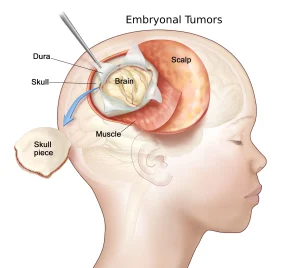
Surgery to remove the tumor: The primary goal is to remove as much of the tumor as possible without damaging surrounding brain tissue. After surgery, other treatments are often used to destroy any remaining tumor cells.
Radiation therapy: This treatment uses focused energy beams, such as X-rays or protons, to destroy tumor cells. Proton beam therapy allows for precise targeting, reducing damage to nearby healthy tissue. However, proton therapy is available only at select specialized centers.
Chemotherapy: Chemotherapy drugs destroy cancer cells throughout the body. They may be given through a vein or taken orally. Chemotherapy can be used after surgery or radiation therapy, or sometimes alongside radiation to enhance treatment effectiveness.
Clinical trials: Clinical research studies provide access to new and advanced treatment methods that are still being tested. These trials may offer additional hope for children with embryonal tumors, although potential side effects may not yet be fully understood. Discuss with your healthcare team whether participation in a clinical trial is appropriate for your child.
Advertisement
