
Overview
Diagnosis
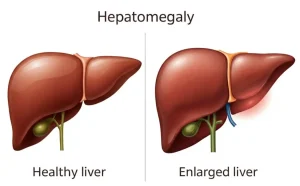
To diagnose an enlarged liver (hepatomegaly), a healthcare professional may begin with a physical examination. During this, the abdomen is gently pressed to feel the size, shape, and texture of the liver. While this can indicate enlargement, further testing is often required for confirmation.
Additional Procedures
If an enlarged liver is suspected, several diagnostic tests may be recommended to identify the cause and extent of liver enlargement:
-
Blood tests: These evaluate liver enzyme levels and help detect infections such as hepatitis or other liver-related conditions.
-
Imaging tests: Ultrasound, CT scan, and MRI provide detailed visuals of the liver’s structure and surrounding organs.
-
Magnetic resonance elastography: This noninvasive test uses sound waves to assess liver stiffness, often helping to detect fibrosis or scarring without a biopsy.
-
Liver biopsy: In this procedure, a thin needle is inserted through the skin to remove a small tissue sample for laboratory testing. The biopsy helps determine the exact cause and severity of liver disease.
Treatment
Treatment for an enlarged liver focuses on managing the underlying condition that caused it. This may include:
-
Medication: To control infections, inflammation, or metabolic disorders.
-
Lifestyle changes: Such as reducing alcohol intake, eating a balanced diet, and maintaining a healthy weight.
-
Monitoring and follow-up: Regular checkups to track liver function and disease progression.
Preparing for Your Appointment
If your healthcare provider suspects liver enlargement, you may be referred to a hepatologist (liver specialist). To prepare for your appointment:
-
Ask if any preparations are needed — such as fasting before tests.
-
List your symptoms, including when they began and any related concerns.
-
Prepare a list of medicines, vitamins, and supplements you’re currently taking.
-
Bring a family member or friend to help remember details and advice.
Questions to Ask Your Doctor:
-
What’s likely causing my symptoms?
-
What tests do I need?
-
Is this condition temporary or long-lasting?
-
What’s the best treatment plan for me?
-
Are there lifestyle changes I should make?
-
Should I see a specialist?
-
How often will I need follow-ups?
Advertisement
