
Overview
Diagnosis
Epithelioid sarcoma can be difficult to diagnose because it often resembles more common conditions, such as skin infections or non-healing sores. This similarity can delay proper diagnosis until further testing is done.
Tests and procedures used for diagnosis include:
-
Imaging tests: Imaging techniques such as X-ray, MRI, CT scan, and positron emission tomography (PET) help determine the location, size, and spread of the tumor. These scans provide detailed images that guide diagnosis and treatment planning.
-
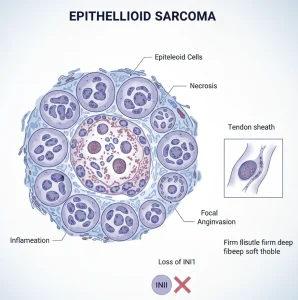
Biopsy: A biopsy involves removing a sample of tissue for laboratory testing. The sample may be taken using a needle inserted through the skin or during surgery. The tissue is examined under a microscope to confirm whether it is cancerous. Additional specialized tests may be performed to identify the type of cancer cells and their characteristics. This information helps the healthcare team create an appropriate treatment plan.
Treatment
Surgery is the primary treatment for epithelioid sarcoma, though additional therapies may be used to reduce recurrence or treat advanced disease.
Surgery
Surgical removal of the tumor and some surrounding healthy tissue helps ensure that all cancer cells are eliminated. Removing a margin of normal tissue lowers the risk of the cancer returning.
Radiation therapy
Radiation therapy uses high-energy beams to destroy cancer cells. It may be applied before surgery to shrink the tumor or after surgery to eliminate any remaining cancer cells.
Targeted therapy
Targeted therapy focuses on blocking specific molecules that cancer cells need to grow and survive. Tazemetostat (Tazverik) is one such targeted drug that may be used when surgery is not possible or when other treatments are ineffective.
Chemotherapy
Chemotherapy uses powerful drugs to kill cancer cells throughout the body. It may be recommended if epithelioid sarcoma has spread or when surgery cannot remove the tumor completely.
Clinical trials
Clinical trials offer access to new and experimental treatments. Participation in these studies provides an opportunity to try the latest therapies, though side effects and long-term outcomes may not yet be fully understood. Discuss with your healthcare team whether a clinical trial might be appropriate for you.
Preparing for your appointment
If you notice symptoms that do not improve or a sore that does not heal, schedule an appointment with a healthcare provider. If epithelioid sarcoma is suspected, you may be referred to an oncologist, a specialist in cancer care.
How to prepare:
-
Ask in advance if any special preparations are needed, such as fasting before tests.
-
Make a list of your symptoms, even those that seem unrelated.
-
Note key personal and family medical history, including any recent life changes.
-
Write down all medications, vitamins, and supplements you take, along with their dosages.
-
Prepare a list of questions for your healthcare professional.
Questions to ask your doctor:
-
Do I have cancer?
-
What tests do I need next?
-
What are my treatment options and potential risks?
-
Can any of these treatments cure the cancer?
-
May I have a copy of my pathology report?
-
How soon do I need to start treatment?
-
Are there educational materials or websites you recommend?
-
What might happen if I decide not to have treatment?
What to expect from your doctor
Your healthcare professional may ask several questions to understand your symptoms better, such as:
-
When did your symptoms begin?
-
Are they constant or occasional?
-
How severe are your symptoms?
-
What seems to make them better or worse?
Answering these questions clearly and sharing detailed information can help your healthcare team reach an accurate diagnosis and create an effective treatment plan.
Advertisement
