
Overview
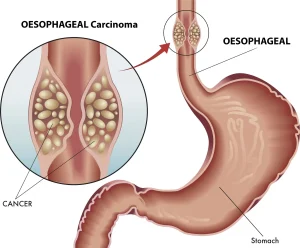
Diagnosis
Diagnosis of esophageal cancer often begins with imaging and endoscopic tests to closely examine the esophagus and identify any abnormal growths or cancerous tissue.
Endoscopy
A thin, flexible tube with a camera, called an endoscope, is passed down the throat to view the inside of the esophagus. During this procedure, tissue samples may be taken for further testing.
Barium swallow study
This X-ray test evaluates the structure and movement of the esophagus. Before the test, you drink a white liquid called barium, which coats the esophagus and makes it visible on X-rays. Any irregularities, such as tumors, can be detected through this test. If results show abnormalities, an endoscopy is often recommended for further evaluation.
Upper endoscopy
An upper endoscopy helps visualize the upper digestive tract, including the esophagus. A healthcare professional passes the endoscope through the mouth into the esophagus to identify suspicious areas that may indicate cancer.
Biopsy
A biopsy involves collecting a small tissue sample from the esophagus using tools inserted through the endoscope. The sample is analyzed in a laboratory to confirm the presence of cancer cells and determine the type of cancer.
Determining the extent of the cancer
After diagnosis, further tests are done to determine the stage of the cancer and whether it has spread. Imaging tests may include:
-
Bronchoscopy
-
Endoscopic ultrasound
-
CT scan
-
MRI scan
-
PET scan
These tests help the healthcare team plan the most effective treatment approach. The stages of esophageal cancer range from 0 to 4, with stage 0 limited to the surface layer and stage 4 indicating spread to other organs.
Treatment
Treatment for esophageal cancer depends on the stage, type, and overall health of the patient. For early-stage cancers, surgery is usually the primary treatment. Advanced cancers may require a combination of chemotherapy, radiation, and other targeted approaches.
Surgery
-
Endoscopic resection: Used for small, early-stage cancers, this procedure removes the cancer and surrounding healthy tissue through an endoscope.
-
Esophagectomy: Involves removing the cancerous part of the esophagus and nearby lymph nodes, sometimes including part of the stomach. The remaining esophagus is reattached to the stomach or reconstructed using a section of the colon.
Surgery carries risks such as infection, bleeding, or leakage at the reconnection site. It may be performed through open surgery or laparoscopic techniques depending on the case.
Chemotherapy
Chemotherapy uses powerful medicines to destroy cancer cells. It can be used before or after surgery and is often combined with radiation therapy. For advanced cases, chemotherapy helps manage symptoms and slow disease progression. Side effects can include fatigue, nausea, vomiting, diarrhea, and appetite loss.
Radiation therapy
This treatment uses high-energy beams, such as X-rays or protons, to destroy cancer cells. External beam radiation is the most common form. In some cases, radiation is delivered internally through brachytherapy. It can be combined with chemotherapy or used to relieve symptoms like difficulty swallowing. Side effects include skin irritation, painful swallowing, and damage to nearby organs.
Combined chemotherapy and radiation
Combining both treatments can improve outcomes by increasing cancer cell destruction. This approach is often used before surgery or as the main treatment when surgery is not possible. However, side effects may be more severe.
Targeted drug therapy
Targeted therapy attacks specific molecules within cancer cells that promote their growth. It’s usually used for advanced or recurrent cancers and may be combined with chemotherapy. Testing the tumor’s genetic profile helps determine if targeted drugs will be effective.
Immunotherapy
Immunotherapy boosts the body’s immune system to help it recognize and destroy cancer cells. It may be used before or after surgery, or for advanced esophageal cancer that cannot be surgically removed.
Treatments for complications
-
Relieving esophageal obstruction: A metal stent may be inserted to keep the esophagus open. Other methods include laser therapy, photodynamic therapy, or radiation.
-
Providing nutrition: A feeding tube may be used when swallowing is difficult or during recovery from surgery to ensure proper nutrition.
Palliative care
Palliative care focuses on improving comfort and quality of life during treatment. It helps manage pain and symptoms while supporting both patients and families. This care can be provided alongside active cancer treatments and has been shown to improve overall well-being and longevity.
Advertisement
