
Overview
Diagnosis
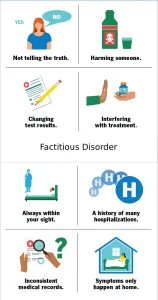
Diagnosing factitious disorder is often challenging because people with this condition are skilled at faking illnesses and medical symptoms. They may intentionally create or exaggerate conditions that appear real and serious. The use of multiple healthcare facilities, fake identities, and privacy laws can make it even harder to collect accurate medical histories.
Diagnosis is based on identifying symptoms that are fabricated rather than focusing on the person’s intent. A healthcare professional may suspect factitious disorder when:
-
The medical history does not make sense
-
There is no logical reason for the illness or injury
-
The illness does not follow the usual course
-
There is no improvement despite correct treatment
-
Symptoms or lab results are inconsistent
-
The person refuses to share previous medical records or information from other doctors
-
The person is caught lying or self-inflicting harm
To confirm the diagnosis, healthcare professionals may:
-
Conduct a detailed interview
-
Review past medical records
-
Seek information from family members, if permission is granted
-
Run only essential diagnostic tests to check for actual physical problems
Treatment
Treating factitious disorder can be difficult, as people often resist therapy or deny their condition. However, a nonjudgmental and supportive approach can help them engage in care.
An approach without judgment
Direct confrontation may cause anger or denial, leading patients to abandon treatment. Instead, healthcare professionals often use a gentle approach, acknowledging the stress of unexplained symptoms and suggesting that mental or emotional factors might be involved. They may agree to explore mental health reasons if medical treatments continue to fail.
The main focus of treatment is on improving functioning and quality of life rather than eliminating all symptoms. The healthcare team aims to guide the person toward mental health care while minimizing unnecessary medical interventions.
Treatment options
Treatment usually focuses on long-term management and may include:
-
Having a primary healthcare professional: A single provider can coordinate care and reduce unnecessary consultations or procedures.
-
Talk therapy: Psychotherapy and behavioral therapy can help reduce stress and build coping mechanisms. Family therapy may also be beneficial.
-
Medicine: Antidepressants or anti-anxiety medicines may be used to treat related mental health conditions.
-
In-hospital treatment: In severe cases, short-term hospitalization may be necessary to ensure safety and create a structured treatment plan.
If treatment is not accepted or effective, the goal becomes preventing further harm and avoiding unnecessary or risky procedures. When factitious disorder is imposed on others, it is treated as abuse and must be reported to authorities.
Lifestyle and home remedies
Along with professional treatment, certain self-care measures may help manage the condition:
-
Stay committed to your treatment plan and therapy sessions
-
Have a trusted primary care provider manage all medical needs
-
Remember the risks of unnecessary tests and surgeries
-
Avoid switching doctors or locations to escape diagnosis
-
Build supportive relationships and seek social connections
Preparing for your appointment
People with factitious disorder often come to mental health evaluation after healthcare professionals raise concerns. Family members may be asked to share background information to help with diagnosis and care planning.
To prepare for the appointment:
-
Make a detailed list of health history, past diagnoses, and treatments
-
Record current symptoms and behaviors that raise concern
-
Include major life events, trauma, or losses
-
List all medicines, supplements, and dosages
-
Mention any substance misuse, such as drugs or alcohol
-
Prepare questions to ask the healthcare professional
Questions to ask the healthcare professional
-
What is likely causing the symptoms?
-
Are there any other possible explanations?
-
How will the diagnosis be confirmed?
-
Is this a long-term condition?
-
What treatments are recommended?
-
How much improvement can be expected?
-
Will family therapy help?
-
What steps should be taken next?
What to expect from the doctor
The healthcare professional may ask about:
-
Recent or past illnesses and treatments
-
History of changing healthcare providers frequently
-
Concerns raised by others about self-inflicted illness
-
Impact of symptoms on personal and professional life
-
Any self-harm or suicidal behavior
-
Childhood experiences, trauma, or abuse
-
Conversations held with the person about these concerns
This structured and compassionate approach helps guide both patients and their families toward proper understanding and management of factitious disorder.
Advertisement
