
Overview
Diagnosis
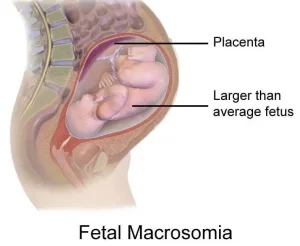
Fetal macrosomia cannot be confirmed until after birth, when the baby is weighed. However, if certain risk factors are present during pregnancy, healthcare professionals may recommend tests to monitor fetal growth and estimate weight.
Common diagnostic methods include:
-
Ultrasound:
In the later stages of the third trimester, an ultrasound may be used to measure the fetus’s head, abdomen, and limbs. These measurements help estimate fetal weight, but ultrasound predictions are not always precise. -
Ongoing antenatal testing:
When fetal macrosomia is suspected due to an underlying health condition such as diabetes, regular monitoring may be recommended to assess fetal well-being. These tests are not typically needed if macrosomia is the only concern.Tests may include:
-
Nonstress test, which measures changes in the fetal heart rate in response to movement.
-
Fetal biophysical profile, which combines ultrasound with a nonstress test to evaluate fetal movement, breathing, and amniotic fluid levels.
-
If fetal macrosomia is suspected, it can be beneficial to consult a pediatrician with experience in managing large newborns.
Treatment
Vaginal delivery may still be possible for a large baby, but the safest delivery method depends on individual circumstances. It is important to discuss labor and delivery options, along with potential risks, with your healthcare professional.
Inducing labor with medication is usually not recommended for suspected fetal macrosomia unless there are additional medical concerns that make it necessary. Studies show that induction does not significantly reduce the risks associated with large fetal size.
A cesarean section (C-section) may be advised in the following situations:
-
The pregnant person has diabetes, and the estimated fetal weight is 9 pounds 15 ounces (4,500 grams) or more.
-
The pregnant person does not have diabetes, and the estimated fetal weight is 11 pounds (5,000 grams) or more.
-
There is a history of shoulder dystocia, where a baby’s shoulder became stuck behind the pelvic bone in a previous delivery.
If a C-section is recommended, ensure you understand both the risks and benefits before making a decision.
After delivery, babies born with fetal macrosomia are carefully evaluated for:
-
Birth injuries
-
Low blood sugar (hypoglycemia)
-
Increased red blood cell count (polycythemia)
Some newborns may require specialized care in a neonatal intensive care unit.
Babies with fetal macrosomia have a higher risk of developing obesity and type 2 diabetes later in childhood. Ongoing monitoring and regular checkups with a pediatrician can help manage these risks.
If you give birth to a baby with fetal macrosomia and were not previously diagnosed with diabetes, your healthcare provider may recommend diabetes testing. During future pregnancies, you will likely be monitored closely for signs of gestational diabetes, a type of diabetes that develops during pregnancy.
Advertisement
