
Overview
Diagnosis
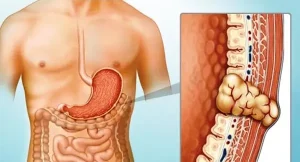
To diagnose a gastrointestinal stromal tumor, often referred to as a GIST, a healthcare professional begins by reviewing your symptoms and medical history. GISTs are cancers that develop in the digestive system, most commonly in the stomach or small intestine.
If your symptoms suggest that you may have a GIST, further testing is usually recommended to confirm the diagnosis and determine the extent of the cancer.
Common diagnostic tests for GIST include:
-
Imaging tests
Imaging scans help locate the tumor and measure its size. Common imaging methods include:-
Ultrasound
-
Computed tomography (CT) scan
-
Magnetic resonance imaging (MRI)
-
Positron emission tomography (PET) scan
Not every patient requires all these tests; your care team will choose based on your specific condition.
-
-
Upper endoscopy
This test uses a long, flexible tube with a light and camera, called an endoscope, which is passed through the mouth and throat into the stomach and the first part of the small intestine. It allows doctors to view the inner surfaces of these organs for signs of a tumor. -
Endoscopic ultrasound (EUS)
Similar to an upper endoscopy, this test uses an endoscope with an ultrasound probe on its tip. The probe produces detailed images of the digestive tract and nearby tissues, helping measure the tumor and evaluate its depth. -
Fine-needle aspiration biopsy
During this procedure, a thin, hollow needle is guided into the tumor using ultrasound to collect tissue samples. These samples are sent to a laboratory to determine whether the cells are cancerous. If the sample is insufficient or unclear, surgery may be needed to obtain more tissue. -
Laboratory tests on biopsies
The collected tissue samples are analyzed in a lab to identify cancer cells and specific mutations. These results help determine the exact type of tumor and guide treatment decisions, such as which targeted therapies may be effective.
Treatment
Treatment for gastrointestinal stromal tumors usually includes surgery and targeted therapy. The best treatment approach depends on the tumor’s size, location, growth rate, and whether it has spread to other areas of the body.
Some small GISTs that do not cause symptoms may not need immediate treatment. In such cases, regular imaging and monitoring are recommended to track tumor growth.
Surgery
The primary goal of surgery is to completely remove the tumor. Surgery is often the first treatment for GISTs that have not spread.
-
Minimally invasive surgical techniques are commonly used, involving small incisions in the abdomen.
-
Surgery may not be possible if the tumor is very large or has grown into surrounding structures. In these cases, targeted therapy may be used first to shrink the tumor before surgery.
Targeted therapy
Targeted therapy uses medicines that block specific molecules involved in cancer cell growth. For GISTs, these treatments focus on blocking an enzyme called tyrosine kinase, which helps the tumor grow and spread.
-
The most common targeted therapy medicine for GISTs is imatinib (Gleevec).
-
Treatment may be used:
-
After surgery to reduce the risk of cancer returning
-
Before surgery to shrink the tumor for easier removal
-
As the main treatment if the cancer has spread
-
If the GIST returns after previous treatment
-
If imatinib is ineffective or stops working, other targeted therapies may be used. Ongoing research continues to explore new drugs that may improve outcomes for people with GIST.
Advertisement
