
Overview
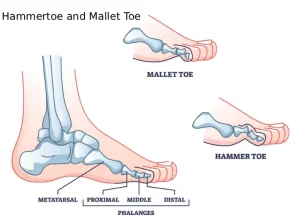
Diagnosis of Hammertoe and Mallet Toe
To diagnose hammertoe or mallet toe, a healthcare professional will inspect your foot and toes. X-rays may be used to examine the bones and joints, but they are not always necessary.
Your provider may ask about:
-
The onset and duration of symptoms
-
Footwear habits
-
Previous injuries or conditions affecting your toes
A thorough assessment helps determine the severity of the toe deformity and the best treatment approach.
Treatment of Hammertoe and Mallet Toe
Treatment depends on the flexibility of the toe and the severity of the condition.
Non-surgical Treatments
For toes that can still be straightened, conservative measures may provide relief:
-
Roomier footwear with a wide toe box
-
Shoe inserts (orthotics) or pads to reduce pressure
-
Taping the toe to maintain proper alignment
-
Exercises to stretch and strengthen toe muscles, such as picking up marbles or scrunching a towel with your toes
Surgical Treatment
If conservative measures are ineffective, surgery may be recommended. Procedures may include:
-
Releasing the tendon that keeps the toe curled
-
Removing a piece of bone to straighten the toe
Surgery is generally considered when pain persists or daily activities are affected.
Lifestyle and Home Remedies
Choosing appropriate footwear can help relieve pain and prevent worsening of the condition:
-
Low-heeled shoes with a wide and flexible toe box
-
At least a half-inch (1.27 centimeters) of space between your longest toe and the shoe tip
-
Avoid tight or narrow shoes that put pressure on the toes
Preparing for Your Appointment
You may start with your primary healthcare provider, who could refer you to a podiatrist or orthopedist.
Before your appointment, prepare:
-
A list of your symptoms and when they began
-
Relevant personal and medical history, including injuries to your toes
-
All medications, vitamins, and supplements, including doses
-
Questions for your healthcare provider
Questions to ask may include:
-
What is likely causing my foot condition?
-
What tests do I need?
-
Am I likely to have this condition long-term?
-
What is the best course of action?
-
Am I a candidate for surgery? Why?
-
Are there restrictions I should follow?
-
Should I see a specialist?
-
Are there resources or websites you recommend?
What to Expect From Your Doctor
Your healthcare provider may ask questions such as:
-
How much pain are your feet or toes causing?
-
Where exactly is the pain located?
-
What improves or worsens your symptoms?
-
What type of shoes do you usually wear?
This assessment helps guide an appropriate treatment plan and supports long-term foot health.
Advertisement
