
Overview
Diagnosis
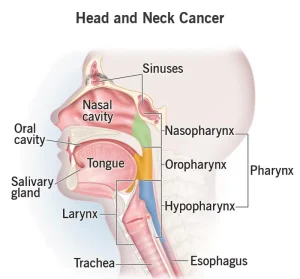
Head and neck cancer diagnosis often begins with a thorough physical examination and continues with specific tests depending on the cancer’s location. These cancers can develop in the mouth, throat, sinuses, or salivary glands.
Examining the head and neck area helps healthcare professionals identify abnormal sores, lumps, or swelling. The healthcare provider may use a light and mirror to inspect the mouth or insert a tiny camera through the nose or throat to visualize internal structures. This camera allows a closer look for possible signs of cancer.
Imaging tests such as CT scans, MRI scans, and PET scans help detect the size, location, and spread of the tumor. These scans provide a detailed view of the affected area, guiding further treatment planning.
A biopsy is essential to confirm the diagnosis. During this procedure, a small tissue sample is removed for laboratory testing. Depending on the tumor’s location, tissue may be collected using a cutting tool, a needle, or a special device inserted through the nose or throat.
In the laboratory, pathologists analyze the tissue sample to determine whether it contains cancer cells. Additional tests can identify specific features of the cancer, such as the presence of HPV infection. These findings help doctors create a personalized treatment plan for each patient.
Treatment
Treatment for head and neck cancer depends on the cancer’s stage, location, and overall health of the patient. Common treatment options include surgery, radiation therapy, chemotherapy, targeted therapy, immunotherapy, and palliative care.
Surgery is often the first line of treatment, where surgeons remove the tumor along with some surrounding healthy tissue to ensure complete removal. If the tumor cannot be surgically removed, other treatments such as radiation or chemotherapy may be recommended first. Some surgeries may impact speech or swallowing, and reconstructive surgery or rehabilitation may be necessary to restore these functions.
Radiation therapy uses high-energy beams such as X-rays or protons to destroy cancer cells. It is often used after surgery to eliminate any remaining cancer cells or as the main treatment when surgery isn’t possible.
Chemotherapy uses powerful medications to kill cancer cells and is sometimes combined with radiation therapy to enhance its effectiveness. It can also be used if the cancer spreads to other parts of the body.
Targeted therapy focuses on specific molecules within cancer cells that promote growth. By blocking these targets, it helps stop cancer progression and can be particularly useful when the cancer has spread.
Immunotherapy boosts the body’s immune system to detect and destroy cancer cells more effectively. It is generally used for advanced or metastatic head and neck cancers.
Palliative care plays an important role in improving the patient’s quality of life by managing pain and other symptoms. It is provided alongside other cancer treatments and involves a multidisciplinary team of specialists.
Clinical trials may also be an option for some patients, offering access to new and potentially more effective treatments. Discussing this option with the healthcare team can help determine eligibility and potential benefits.
Advertisement
