
Overview
Diagnosis
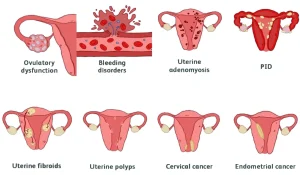
To diagnose heavy menstrual bleeding or abnormal uterine bleeding, your healthcare provider will begin with a detailed medical history and discussion about your menstrual cycles. You may be asked to keep a diary tracking your bleeding days, flow intensity, and the number of pads or tampons used.
A physical exam is typically followed by certain tests or procedures, which may include:
-
Blood tests: Used to check for iron deficiency anemia, thyroid disorders, or blood-clotting issues.
-
Pap test: Collects cervical cells to check for inflammation, precancerous changes, or human papilloma virus (HPV) infection.
-
Endometrial biopsy: Involves taking a tissue sample from the uterine lining to look for cancer or precancerous cells.
-
Ultrasound: Uses sound waves to create images of the uterus, ovaries, and pelvis.
If initial results indicate further evaluation is needed, your doctor may recommend:
-
Sonohysterography: A fluid is injected into the uterus through a small tube, and ultrasound is used to identify abnormalities in the uterine lining.
-
Hysteroscopy: A thin, lighted instrument is inserted through the vagina and cervix to directly view the inside of the uterus.
A diagnosis is confirmed once other potential causes—such as menstrual disorders, medical conditions, or medications—are ruled out.
Treatment
Treatment for heavy menstrual bleeding depends on several factors, including your age, medical history, cause of the condition, tolerance for medications or procedures, and reproductive plans.
Medicines
Medications are often the first approach and may include:
-
NSAIDs (Nonsteroidal anti-inflammatory drugs): Ibuprofen or naproxen help reduce menstrual blood loss and relieve cramps.
-
Tranexamic acid (Lysteda): Taken only during bleeding to decrease menstrual flow.
-
Oral contraceptives: Help regulate cycles and reduce prolonged or heavy bleeding.
-
Oral progesterone or progestin: Balances hormones and controls bleeding.
-
Hormonal IUD: Releases levonorgestrel to thin the uterine lining and decrease flow and cramping.
-
Other hormone therapies: GnRH agonists and antagonists, such as Relugolix (Myfembree), Elagolix (Oriahnn or Orilissa), may help manage fibroid- or endometriosis-related bleeding.
If heavy bleeding causes anemia, iron supplements are often prescribed.
Procedures
When medications don’t provide sufficient relief, surgical options may be considered:
-
Dilation and curettage (D&C): The cervix is opened, and the uterine lining is scraped or suctioned to remove tissue and find the cause of bleeding.
-
Uterine artery embolization: Blocks blood flow to fibroids to shrink them and reduce bleeding.
-
Focused ultrasound: Uses ultrasound and radiofrequency energy to target and shrink fibroids without incisions.
-
Myomectomy: Removes fibroids while preserving the uterus, performed either laparoscopically or through hysteroscopy.
-
Endometrial ablation: Destroys the uterine lining using heat, laser, or radio waves to reduce bleeding. Pregnancy after this procedure is risky, so birth control is recommended.
-
Endometrial resection: Removes the uterine lining using an electrosurgical loop; pregnancy is not advised afterward.
-
Hysterectomy: Removes the uterus and cervix, ending menstrual periods and the ability to conceive. It may require hospitalization and anesthesia.
In some cases, treating an underlying condition such as thyroid disease can significantly reduce heavy bleeding without the need for surgical intervention.
Advertisement
