
Overview
Diagnosis
Diagnosis of hereditary hemorrhagic telangiectasia, also known as HHT, is based on a combination of a physical exam, family history, and imaging test results. Genetic testing may also confirm the diagnosis. Because some symptoms appear later in life, children or young adults may not show clear signs of HHT at first.
Imaging tests
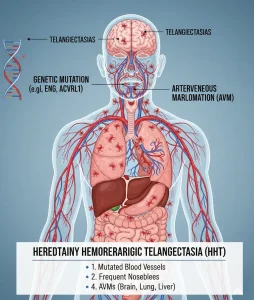
Arteriovenous malformations, or AVMs, are abnormal connections between arteries and veins that can occur in internal organs such as the lungs, brain, and liver. Imaging tests help locate and assess these AVMs. Common tests include:
-
Ultrasound: Checks for AVMs affecting the liver.
-
MRI: Detects AVMs in the brain, liver, and other abdominal organs.
-
Echocardiogram bubble study: A healthcare professional uses an IV to inject a small amount of air bubbles. The test helps identify and evaluate lung AVMs.
-
CT scan: Confirms AVMs in the lungs, liver, and other abdominal organs.
Treatment
If possible, treatment for HHT should be sought at a specialized HHT Center of Excellence. These centers are equipped to diagnose and treat every aspect of this rare condition for people of all ages. Cure HHT designates such centers in the United States, including Mayo Clinic.
Medications
Medicines for HHT help control bleeding and manage symptoms. They are generally grouped into three main categories:
-
Hormone-related drugs: Estrogen-based medicines can reduce bleeding but often have side effects at high doses. Anti-estrogen drugs such as tamoxifen (Soltamox) and raloxifene (Evista) may also help control bleeding.
-
Medicines that block blood vessel growth: Treatments like bevacizumab (Avastin), administered intravenously, can limit abnormal blood vessel growth. Other options include pazopanib (Votrient), pomalidomide (Pomalyst), and tacrolimus (Prograf, Protopic, others).
-
Medicines that slow clot dissolving: Tranexamic acid (Cyklokapron, Lysteda) can control heavy bleeding in emergencies and may help prevent bleeding when used regularly.
If HHT causes iron deficiency anemia, iron infusions given through a vein are often more effective than iron pills.
Surgical and other procedures for the nose
Frequent and severe nosebleeds are a common symptom of HHT and can lead to anemia. Treatment options for reducing the number and severity of nosebleeds include:
-
Ablation: Uses laser or other energy-based methods to seal bleeding vessels, though nosebleeds often return over time.
-
Skin graft: Transfers skin, usually from the thigh, to the inside of the nose to reduce bleeding. This is rarely done today due to improved medical treatments.
-
Surgically closing the nostrils: Used only when other treatments fail, this procedure joins skin flaps to close the nostrils and stop nosebleeds permanently.
Surgical and other procedures for the lungs, brain and liver
HHT can affect internal organs like the lungs, brain, and liver. Specialized procedures may be needed to treat AVMs in these areas.
-
Embolization: A healthcare professional inserts a thin tube into the blood vessel and places a plug or metal coil to block blood flow to the AVM. This procedure is used for lung and brain AVMs, but not for those in the liver.
-
Surgical removal: In rare cases, certain AVMs in the brain or lungs may need to be surgically removed.
-
Stereotactic radiotherapy: Uses focused radiation beams from multiple angles to treat AVMs in the brain.
-
Liver transplant: In severe cases, a liver transplant may be needed to treat liver AVMs.
Early diagnosis and multidisciplinary care are key to managing hereditary hemorrhagic telangiectasia and improving quality of life.
Advertisement
