
Overview
Diagnosis
A hip fracture is often diagnosed based on visible symptoms and the unusual position of the leg and hip. A healthcare professional can typically identify the injury through a physical examination and will confirm the diagnosis with imaging tests.
An X-ray is the first step to confirm the presence and location of the fracture. If the X-ray does not clearly show a fracture but hip pain persists, additional imaging may be recommended, such as:
-
Magnetic resonance imaging (MRI): Helps detect small or hairline fractures that may not appear on X-rays.
-
Bone scan: Used to identify subtle fractures and assess overall bone health.
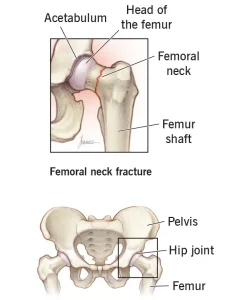
Most hip fractures occur in one of two key areas of the femur (the long bone extending from the pelvis to the knee):
-
The femoral neck: Located just below the ball portion of the hip joint, known as the femoral head.
-
The intertrochanteric region: Found slightly lower on the femur, in the part that angles outward from the hip joint.
The location of the fracture helps determine the most appropriate treatment and surgical approach.
Treatment
Treatment for a hip fracture usually involves surgery, rehabilitation, and supportive care to manage pain and prevent complications such as infection or blood clots. The primary goal is to restore mobility and independence as quickly and safely as possible.
Surgical options depend on the location and severity of the fracture, as well as the patient’s overall health:
-
Internal repair with screws: Metal screws are inserted to hold the bone fragments together as they heal. In some cases, screws are attached to a metal plate for added stability.
-
Partial hip replacement: Involves replacing the upper part of the femur while keeping the natural socket intact. This option is often used for older adults or those with other medical conditions.
-
Total hip replacement: Replaces both the upper femur and the socket with artificial components (prostheses). This option is typically recommended for healthy, active individuals, as it provides better long-term outcomes and improved mobility.
If the fracture disrupts the blood supply to the femoral head, especially in femoral neck fractures, a partial or total hip replacement may be preferred to promote healing and prevent complications.
Rehabilitation
After surgery, rehabilitation is essential to restore movement, strength, and independence. Physical therapy typically begins with gentle range-of-motion exercises and progresses to strengthening and balance training.
Depending on recovery needs and home support, rehabilitation may take place in an extended care facility. An occupational therapist can assist in regaining daily living skills, including:
-
Walking with a walker or wheelchair
-
Bathing and dressing safely
-
Using the toilet
-
Cooking and household activities
Consistent rehabilitation and proper post-surgical care greatly improve recovery outcomes and help prevent future falls or hip injuries.
Advertisement
