
Overview
Diagnosis
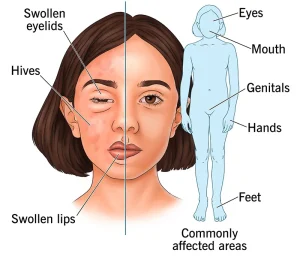
To diagnose hives or angioedema, your doctor will begin with a physical examination of the welts or swollen areas on your skin. They will also ask about your medical history, including any recent exposures to allergens, medications, foods, or environmental triggers.
In some cases, additional tests may be recommended to help identify the cause:
-
Blood tests to look for signs of an allergic reaction or underlying condition
-
Allergy skin tests to identify specific triggers that may be causing the reaction
These tests help your doctor determine whether the hives or angioedema are linked to allergies, infections, medications, or other health conditions.
Treatment
In mild cases, hives and angioedema often clear up on their own without treatment. However, if symptoms are uncomfortable, persistent, or severe, medical treatment can help relieve itching, swelling, and inflammation.
Medications
Treatment options for hives and angioedema may include:
-
Anti-itch drugs: The most common treatment is non-drowsy antihistamines, which help reduce itching, swelling, and other allergic symptoms. These are available both over the counter and by prescription.
-
Drugs that suppress the immune system: If antihistamines are not effective, your doctor may prescribe medicines that calm an overactive immune response.
-
Drugs for hereditary angioedema: People with the inherited form of angioedema may take medications to manage symptoms and maintain normal protein levels in the blood.
-
Anti-inflammatory drugs: For more severe symptoms, a short course of oral corticosteroids such as prednisone may be prescribed to quickly reduce inflammation and itching.
Emergency situations
Severe cases of hives or angioedema can cause dangerous swelling that affects breathing or swallowing. In such cases, emergency treatment is required. You may need an injection of epinephrine, a fast-acting medication that reduces swelling and opens airways.
If you have a history of severe allergic reactions or recurring episodes, your doctor may recommend carrying an epinephrine auto-injector. This penlike device allows you to self-inject epinephrine during emergencies to prevent life-threatening complications.
Advertisement
