
Overview
Diagnosis
Diagnosing hypertrophic cardiomyopathy begins with a thorough physical examination and a detailed review of your symptoms, medical history, and family history. A healthcare professional listens to your heart using a stethoscope to detect murmurs that may suggest abnormal heart function. If you have a family history of hypertrophic cardiomyopathy, genetic testing or counseling may also be recommended.
Common diagnostic tests include:
-
Echocardiogram: The primary test for hypertrophic cardiomyopathy. It uses sound waves to create images of the heart in motion and helps evaluate how well the chambers and valves function. It also reveals if the heart muscle is abnormally thickened.
-
Electrocardiogram (ECG or EKG): Measures the electrical activity of the heart. Electrodes placed on the chest, arms, and legs record the rhythm and detect irregularities or signs of thickened heart muscle.
-
Holter monitor: A portable ECG device worn for one or two days during normal activities to record continuous heart rhythms.
-
Cardiac MRI: Uses strong magnetic fields and radio waves to create detailed images of the heart and assess muscle structure and valve function. Often done alongside an echocardiogram for greater detail.
-
Stress test: Monitors how the heart responds to physical exertion, usually involving treadmill walking or cycling. It helps detect abnormal heart rhythms or reduced blood flow during exercise.
-
Cardiac CT scan: Rarely used but may be suggested if an MRI cannot be performed. It provides cross-sectional X-ray images showing the heart’s size and structure.
Treatment
Treatment for hypertrophic cardiomyopathy aims to manage symptoms, improve heart function, and prevent complications such as sudden cardiac death. The treatment approach depends on the severity of symptoms, age, overall health, and individual risk factors.
Medications
Medications are often the first line of treatment and help the heart pump more efficiently by reducing strain and controlling heart rate. Common options include:
-
Beta blockers such as metoprolol, propranolol, or atenolol to slow the heart rate and improve blood flow.
-
Calcium channel blockers such as verapamil or diltiazem to relax heart muscles and improve filling.
-
Mavacamten (Camzyos): Specifically used for obstructive hypertrophic cardiomyopathy when beta blockers or calcium channel blockers are not effective.
-
Heart rhythm medicines like amiodarone or disopyramide to prevent irregular heartbeats.
-
Blood thinners such as warfarin, dabigatran, rivaroxaban, or apixaban to prevent blood clots, particularly for those with atrial fibrillation or apical hypertrophic cardiomyopathy.
Surgeries and procedures
When medications are not enough, surgical or device-based treatments may be considered. Options include:
-
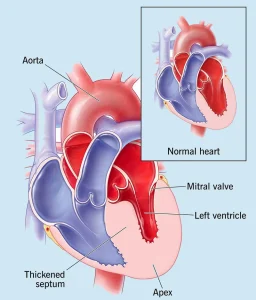
Septal myectomy: An open-heart surgery that removes a portion of the thickened septum (the wall separating the heart chambers) to improve blood flow. In some cases, the mitral valve is repaired during the same procedure. A variation called apical myectomy targets thickening near the heart’s tip.
-
Septal ablation: A minimally invasive procedure that injects alcohol into an artery supplying the thickened area to shrink the heart muscle. A potential complication is heart block, which may require a pacemaker.
-
Implantable cardioverter-defibrillator (ICD): A small device placed under the skin near the collarbone that monitors heart rhythm and delivers shocks if dangerous arrhythmias occur. It is effective in preventing sudden cardiac death.
-
Cardiac resynchronization therapy (CRT): Used in rare cases to coordinate the heart’s pumping pattern and improve efficiency.
-
Ventricular assist device (VAD): A mechanical pump implanted to support heart function in severe cases.
-
Heart transplant: Considered when other treatments fail and heart failure reaches an advanced stage.
Early diagnosis and proper management significantly improve quality of life and reduce the risk of complications for people living with hypertrophic cardiomyopathy.
Request an appointment
Advertisement
