
Overview
Diagnosis
Diagnosis for illness anxiety disorder typically begins with a physical exam and any tests your primary care provider recommends. These steps help identify whether any medical conditions need treatment and prevent unnecessary lab tests, imaging or referrals.
Your provider may also refer you to a mental health professional for further evaluation.
A mental health evaluation may include:
-
Discussing your symptoms, stressful events, family history, fears and how anxiety affects your daily life
-
Completing psychological questionnaires or self-assessments
-
Reviewing alcohol, drug or substance use
-
Determining whether your symptoms are better explained by another mental health condition, such as somatic symptom disorder or generalized anxiety disorder
Treatment
The main goal of treatment is to lower anxiety about health and improve daily functioning. Psychotherapy is the most effective treatment, and medications may be added when needed.
Psychotherapy
Psychotherapy, especially cognitive behavioral therapy (CBT), helps address the thoughts and behaviors that contribute to illness anxiety disorder. Because emotional stress can create or worsen physical sensations, CBT teaches skills to manage health-related worries more constructively.
CBT can help you:
-
Identify fears and beliefs about having a serious illness
-
Learn new ways to interpret normal body sensations
-
Understand how worry influences your emotions and behaviors
-
Change unhelpful responses to physical sensations
-
Build coping skills for anxiety and stress
-
Reduce avoidance of activities triggered by physical symptoms
-
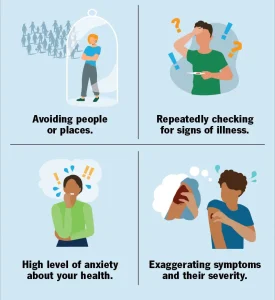
Limit frequent body checking and repeated reassurance seeking
-
Improve functioning at home, work, in relationships and in social settings
-
Address coexisting conditions such as depression
Other therapies, including exposure therapy and stress-management techniques, may also provide benefit.
Medications
Medications such as selective serotonin reuptake inhibitors (SSRIs) may help reduce symptoms of illness anxiety disorder. If you have coexisting mood or anxiety disorders, appropriate medications may also be recommended.
Discuss medication options, possible side effects and risks with your healthcare provider to determine the best approach for your needs.
Advertisement
