
Overview
Diagnosis
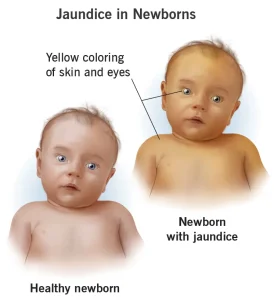
Infant jaundice is typically diagnosed through a visual examination of the baby’s skin and eyes. To determine the severity of jaundice, the level of bilirubin in the blood must be measured. This helps the healthcare professional decide if treatment is needed and how urgent it may be.
Tests used to diagnose jaundice and measure bilirubin may include:
-
A physical exam
-
A blood test to measure bilirubin levels
-
A skin test using a transcutaneous bilirubinometer, which measures how light reflects through the skin
If the jaundice appears to be linked to another medical condition, additional tests may be ordered to identify the underlying cause.
Treatment
Mild jaundice in infants often clears on its own within two to three weeks. However, moderate or severe jaundice may require continued monitoring in the newborn nursery or readmission to the hospital.
Treatment options to reduce bilirubin levels may include:
-
Light therapy, also known as phototherapy, which uses blue-green light to help bilirubin break down so it can be removed through urine and stool. Babies typically wear only a diaper and eye protection during this therapy.
-
Enhanced nutrition through more frequent feedings or supplementation to ensure adequate nourishment and prevent excessive weight loss.
-
Intravenous immunoglobulin (IVIg) for jaundice caused by blood type incompatibility between the mother and baby. IVIg may reduce antibody levels and decrease the need for an exchange transfusion.
-
Exchange transfusion in rare cases where severe jaundice does not respond to other treatments. This involves gradually replacing the baby’s blood with donor blood to lower bilirubin and maternal antibodies.
Advertisement
