
Overview
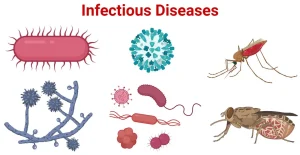
Diagnosis
To diagnose an infectious disease, a healthcare professional begins by reviewing your symptoms and medical history, followed by a physical exam. Depending on the findings, you may need additional tests or imaging to identify the exact cause of your illness.
Lab tests help detect the specific germ responsible for the infection. These may include:
-
Blood tests taken by inserting a needle into a vein
-
Urine tests collected in a container
-
Throat or body swabs to gather samples from moist areas
-
Stool samples to check for parasites or organisms
-
Spinal tap, also called lumbar puncture, to collect cerebrospinal fluid using a needle placed in the lower back
Imaging scans such as X-ray, CT scan, ultrasound or MRI can show internal abnormalities linked to infection.
Biopsies may be used to take a small tissue sample for laboratory testing. For instance, lung tissue can be checked for fungal infections.
Treatment
Effective treatment depends on identifying the specific germ causing the illness. Once confirmed, the healthcare team can recommend targeted therapies.
Antibiotics are used to treat bacterial infections. They work against specific bacterial types and can be chosen more precisely when the exact bacteria is identified. Antibiotics do not help with viral infections. Overuse of antibiotics can lead to antibiotic resistance, making certain bacteria harder to treat.
Antivirals are medicines designed to fight specific viruses. These may be used for conditions such as COVID-19, HIV, herpes, hepatitis B, hepatitis C or influenza.
Antifungals may be applied to the skin for fungal infections of the nails or skin. More serious fungal infections may require oral medicines or intravenous antifungal treatments given in a hospital.
Anti-parasitic medicines treat infections caused by parasites, such as malaria. Some parasites may develop resistance to medicines, making treatment more challenging.
Advertisement
