
Overview
Diagnosis
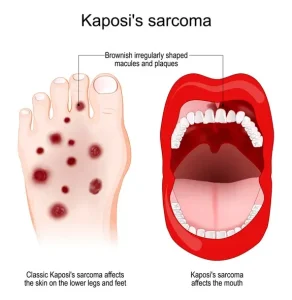
Diagnosing Kaposi sarcoma often involves examining skin lesions and performing tests to check whether the disease is present on the skin or inside the body.
Skin biopsy:
-
Removal of a small skin sample from a lesion for lab testing.
-
Lab analysis helps detect cancer cells.
-
A skin biopsy can confirm Kaposi sarcoma.
Testing for Kaposi Sarcoma Inside the Body
Additional tests may be needed to determine if Kaposi sarcoma has spread to the digestive tract or lungs.
Tests for the digestive tract include:
-
Fecal occult blood test: Detects hidden blood in stool; if positive, further tests such as endoscopy or colonoscopy may be required.
-
Endoscopy: A thin tube passed through the mouth to examine the esophagus, stomach, and upper small intestine.
-
Colonoscopy: A thin tube passed through the rectum into the colon to evaluate the colon walls.
-
CT scan: Detailed X-ray imaging of the abdomen and pelvis to evaluate the digestive tract.
Tests for the lungs include:
-
Chest X-ray: Identifies unusual lung findings that may require further evaluation.
-
CT scan of the chest: Provides detailed images of lung structures.
-
Bronchoscopy: A thin tube passed through the nose or mouth to view the airways and collect lung tissue samples.
Treatment
Kaposi sarcoma does not have a cure, but treatment options can help manage symptoms, control growth and improve quality of life. Some individuals may only need monitoring.
Treatment decisions depend on:
-
Type of Kaposi sarcoma
-
Number and location of lesions
-
Symptoms such as pain or difficulty eating or breathing
-
Overall health
Treatment for AIDS-Related Kaposi Sarcoma
Antiviral HIV therapy:
-
Strengthens the immune system by lowering HIV levels.
-
May be the only treatment needed for Kaposi sarcoma.
Treatment for Transplant-Related Kaposi Sarcoma
Adjusting immunosuppressive medicines:
-
Reducing or switching medicines that suppress the immune system may help control the condition.
Treatment for Small Skin Lesions
Possible treatments include:
-
Minor surgery (excision)
-
Cryotherapy (freezing treatment)
-
Radiation therapy
-
Injection of vinblastine into lesions
-
Topical medication creams or gels
Lesions often return within a couple of years, but treatments can be safely repeated.
Treatment for Many Skin Lesions
Radiation therapy:
-
Uses strong energy beams to kill cancer cells.
-
Suitable when there are many lesions but not enough to require chemotherapy.
Chemotherapy:
-
Uses powerful medicines to destroy cancer cells.
-
Recommended when multiple body areas are affected.
-
Especially useful for rapidly progressing Kaposi sarcoma.
Advertisement
