
Overview
Diagnosis
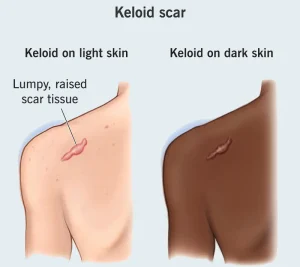
A healthcare professional can usually diagnose a keloid by simply examining the affected skin. In some cases, a skin biopsy may be needed to rule out skin cancer or other skin conditions.
Treatment
Multiple treatment options exist for keloid scars, and often a combination works best. Even after successful flattening or removal, keloids can return or grow larger.
Common treatment approaches include:
-
Wound care using compression dressings, especially for new keloids or after surgery. These must be worn for 12 to 24 hours daily for 4 to 6 months and may be uncomfortable.
-
Prescription corticosteroid creams to reduce itchiness.
-
Injected medicines such as cortisone or other steroids to flatten smaller keloids. Monthly injections may be needed for up to six months.
-
Cryotherapy, where liquid nitrogen is used to freeze small keloids. Multiple sessions may be required.
-
Pulsed-dye laser therapy to flatten large keloids, reduce itching, and improve color. Sessions are spaced 4 to 8 weeks apart and may be combined with steroid injections.
-
Low-level radiation therapy, sometimes used alone or after surgery, to shrink scar tissue.
-
Surgical removal for keloids that do not respond to other methods. Surgery alone has a high recurrence rate, so it is usually combined with additional treatments.
Alternative Medicine
Natural remedies have not been proven effective for removing keloids. Limited clinical studies suggest that onion extract, taken orally or applied to the skin, may help improve appearance or reduce discomfort.
Potential Future Treatments
Research on wound healing and keloid development is ongoing. Promising areas of study include:
-
New topical creams and injectable treatments
-
Botulinum toxin type A to support healing
-
Genetic marker identification within keloid tissue
-
Stem cell therapies
Lifestyle and Home Remedies
These self-care practices may help manage existing keloids or prevent worsening:
-
Follow wound-care instructions carefully, even if they are time-consuming or uncomfortable.
-
Use nonprescription corticosteroid creams to ease itchiness.
-
Apply silicone gel to reduce itching and irritation.
-
Avoid friction or injury to prevent worsening of the keloid.
-
Protect keloids from sun exposure with clothing or sunscreen, as color changes may become permanent.
Preparing for Your Appointment
Contact your doctor if you notice skin changes indicating a potential keloid or if you want treatment for an existing one. Your primary doctor may refer you to a dermatologist.
Bringing a trusted friend or family member may help you remember important details and offer additional insight into your condition.
What You Can Do
Before visiting your doctor, prepare the following:
-
A list of symptoms and how long you’ve had them
-
Your medical history, including injuries, surgeries, or family history of keloids
-
Questions you want to ask during the appointment
Helpful questions include:
-
Am I at risk of developing keloids?
-
How can I reduce my risk in the future?
-
What should I consider before getting a tattoo or piercing?
-
What precautions do I need before or after surgery?
-
When might I see improvements from treatment?
-
How often will my progress be checked?
-
What are the chances of recurrence?
-
What side effects should I expect?
-
What is the best wound-care routine after surgery?
-
Can a keloid turn into cancer?
-
What self-care steps help prevent recurrence?
-
Should I change my skincare products like soaps, lotions, or cosmetics?
What to Expect From Your Doctor
Your doctor may ask questions such as:
-
When did the problem first appear?
-
Have the symptoms improved or worsened?
-
Do other family members have similar issues?
-
How is the keloid affecting your confidence or daily life?
-
What treatments or home remedies have you tried?
-
Have you had recent injuries or surgeries?
Advertisement
