
Overview
Diagnosis
Diagnosis of kidney stones involves several steps to identify the presence of stones and understand their cause. A physical exam is often the first step, followed by tests such as:
-
Blood tests to check calcium and uric acid levels and to assess kidney function
-
Urine testing, often a 24-hour urine collection, to detect stone-forming minerals and substances that prevent stones
-
Imaging tests such as CT scans, high-speed CT, or ultrasound to locate stones
-
Analysis of passed stones using a strainer to determine their chemical makeup
-
Genetic testing if a hereditary condition is suspected, such as cystinuria or primary hyperoxaluria
These diagnostic steps help identify why stones form and guide a long-term prevention plan.
Treatment
Small stones with few symptoms
Most small kidney stones can pass without invasive procedures. Treatment may include:
-
Drinking 2 to 3 quarts of water daily to keep urine diluted
-
Using pain relievers such as ibuprofen or naproxen to manage discomfort
-
Taking alpha blockers to relax ureter muscles and help pass stones more easily
Large stones and stones causing symptoms
Large stones, or those leading to bleeding, infections, or kidney damage, may require more advanced treatment options such as:
-
Using sound waves to break up stones through extracorporeal shock wave lithotripsy
-
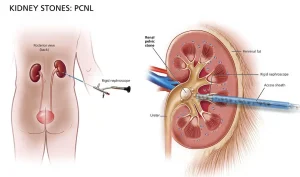
Surgery called percutaneous nephrolithotomy to remove very large kidney stones
-
Using a ureteroscope to remove or break stones in the ureter or kidney, sometimes followed by placing a stent
-
Parathyroid gland surgery when stones are caused by overactive parathyroid glands producing excess hormone
These treatment options are chosen based on the size, type, and location of stones, along with your overall health.
Advertisement
