
Overview
Diagnosis
Doctors often discover chronic leukemia during a routine blood test, even before symptoms appear. If leukemia is suspected, several exams are used to confirm the diagnosis and understand the type and extent of the disease.
Physical exam
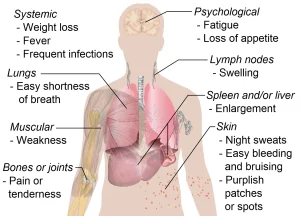
A doctor may check for signs that suggest leukemia. These can include pale skin caused by anemia, swelling in the lymph nodes, or enlargement of the liver and spleen.
Blood tests
A blood sample can show abnormal levels of red blood cells, white blood cells, or platelets. These changes may indicate leukemia. Some types of leukemia release leukemia cells into the bloodstream, where they can be seen under a microscope. In other types, the leukemia cells remain in the bone marrow.
Bone marrow exam
A bone marrow test involves removing a small sample of bone marrow from the hipbone using a thin needle. The sample is examined in a lab for leukemia cells. Specialized testing can identify specific features of the leukemia cells, which helps guide treatment decisions.
Treatment
Treatment for leukemia varies based on factors such as your age, overall health, the specific type of leukemia, and whether it has spread to the central nervous system. A personalized treatment plan is created to give the best possible outcome.
Chemotherapy
Chemotherapy is the primary treatment for many types of leukemia. These medicines destroy leukemia cells and may be given as pills or injected into a vein. Depending on the leukemia type, treatment may involve one or several chemotherapy drugs.
Targeted therapy
Targeted drugs work by focusing on specific changes inside cancer cells. These medicines block signals that cancer cells need to survive. Your leukemia cells may be tested to see if targeted therapy is likely to help.
Radiation therapy
Radiation uses high-energy beams to damage leukemia cells and stop their growth. Treatment may target a specific area where leukemia cells are concentrated or may involve the whole body. Radiation therapy is sometimes used to prepare for a bone marrow transplant.
Bone marrow transplant
A bone marrow transplant, also known as a stem cell transplant, replaces diseased bone marrow with healthy stem cells. Before the transplant, high-dose chemotherapy or radiation destroys the leukemia-producing marrow. Healthy stem cells from a donor or your own previously collected cells are then infused to rebuild healthy bone marrow.
Immunotherapy
Immunotherapy helps your immune system recognize and attack leukemia cells. Cancer cells often hide from the immune system by producing certain proteins. Immunotherapy disrupts this process so the immune system can work more effectively.
CAR-T cell therapy
CAR-T cell therapy is a specialized form of immunotherapy. Your T cells are collected, genetically engineered to attack leukemia cells, and then returned to your body. This treatment may be an option for specific leukemia types.
Request an appointment
Advertisement
