
Overview
Diagnosis
Tests and procedures used to diagnose lip cancer include:
Physical exam
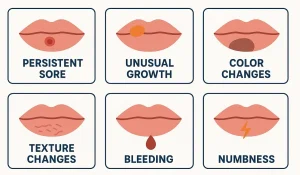
During a physical exam, your doctor will examine your lip, mouth, face, and neck to look for signs of cancer. Your doctor will also ask you about your signs and symptoms.
Removing a sample of tissue for testing (biopsy)
During a biopsy, your doctor will remove a small sample of tissue for laboratory testing. In the laboratory, a pathologist can determine whether cancer is present, the type of cancer, and the level of aggressiveness in the cancer cells.
Imaging tests
Imaging tests may be used to determine whether cancer has spread beyond the lip. Common imaging tests include:
- Computerized tomography (CT)
- Magnetic resonance imaging (MRI)
- Positron emission tomography (PET)
Treatment Options for Lip Cancer
Lip cancer treatments include the following options, chosen based on the size, location, and stage of the cancer.
Surgery
Surgery is used to remove the lip cancer along with a margin of healthy tissue that surrounds it. The surgeon then repairs the lip to allow for normal eating, drinking, and speaking while using techniques to reduce scarring.
- For small lip cancers, repairing the lip after surgery is often a simple procedure.
- For larger lip cancers, skilled plastic and reconstructive surgeons may be needed. Reconstructive surgery can involve moving tissue and skin to the face from another part of the body.
- Surgery may also include removing cancerous lymph nodes in the neck.
Radiation therapy
Radiation therapy uses powerful energy beams, such as X-rays and protons, to kill cancer cells. It may be used alone or after surgery.
- The radiation can be aimed only at the lip or also at the lymph nodes in the neck.
- Most often, radiation comes from a large machine that precisely focuses the energy beams.
- In some cases, brachytherapy is used, where radiation is placed directly on the lip for a short time, allowing higher doses.
Chemotherapy
Chemotherapy uses powerful drugs to kill cancer cells. For lip cancer, it is sometimes combined with radiation therapy to increase effectiveness. In advanced cases that have spread to other areas of the body, chemotherapy may help reduce signs and symptoms and improve comfort.
Targeted drug therapy
Targeted drug treatments focus on specific weaknesses within cancer cells. By blocking these weaknesses, the treatments cause cancer cells to die. Targeted therapy is usually combined with chemotherapy.
Immunotherapy
Immunotherapy helps your immune system fight cancer by interfering with the proteins that allow cancer cells to hide from immune cells. For lip cancer, immunotherapy may be considered when the cancer is advanced and other treatments are no longer an option.
Advertisement
