
Overview
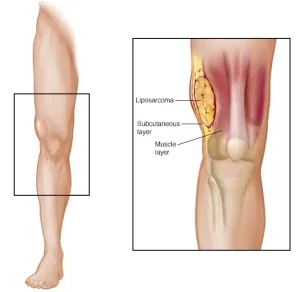
Diagnosis of Liposarcoma
Tests and procedures used to diagnose liposarcoma include:
Imaging tests
Imaging tests create pictures of the inside of the body and help determine the size and location of the liposarcoma. Common tests include:
- X-ray
- CT scan
- MRI
- Positron emission tomography (PET) scan (when needed)
Biopsy
A biopsy involves removing a sample of tissue or cells for laboratory testing. The sample may be obtained using a needle inserted through the skin or during surgery, depending on the tumor’s location.
Laboratory analysis of cancer cells
The biopsy sample is examined by pathologists who confirm whether the cells are cancerous. Additional specialized tests provide details about the cancer type and aggressiveness, helping guide prognosis and treatment planning.
Treatment Options for Liposarcoma
Treatments for liposarcoma focus on removing or destroying the cancer cells and may be used alone or in combination.
Surgery
The primary goal of surgery is to remove all cancer cells while preserving surrounding healthy tissue and organs whenever possible.
- If the liposarcoma involves nearby organs and complete removal is not feasible, other treatments may first be used to shrink the tumor before surgery.
Radiation therapy
Radiation therapy uses high-energy beams, such as X-rays or protons, to kill cancer cells.
- It may be given after surgery to eliminate remaining cancer cells.
- It can also be used before surgery to shrink the tumor and improve the chances of complete removal.
Chemotherapy
Chemotherapy uses powerful drugs, given intravenously or orally, to destroy cancer cells.
- Not all liposarcoma types respond to chemotherapy; lab testing helps determine if it will be effective.
- It may be used before surgery to reduce tumor size, after surgery to target remaining cells, or combined with radiation therapy.
Clinical trials
Clinical trials offer access to new and experimental treatments that are not yet widely available. Participating in a trial may provide additional options, though potential side effects may be unknown. Discuss eligibility with your health care team.
Advertisement
