
Overview
Diagnosis
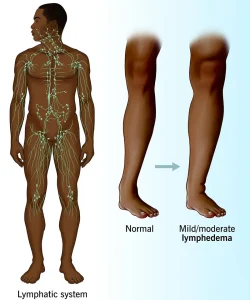
Lymphedema is often diagnosed based on signs and symptoms, especially in individuals at risk, such as those who recently had cancer surgery involving lymph nodes.
If the cause is unclear, imaging tests may be used to examine the lymphatic system, including:
• MRI scan to produce high-resolution 3D images of tissues using magnetic fields and radio waves
• CT scan to create detailed cross-sectional images, revealing blockages in the lymphatic system
• Ultrasound to produce images of internal structures and identify obstructions in lymph or vascular systems
• Lymphoscintigraphy, where a radioactive dye is injected and tracked through lymph vessels to highlight blockages
Care at Mayo Clinic
Mayo Clinic specialists provide comprehensive care for lymphedema management
More Information
Lymphedema care at Mayo Clinic
CT scan
MRI
Treatment
There is no cure for lymphedema. Treatment focuses on reducing swelling and preventing complications.
Medications
Because lymphedema increases the risk of skin infections such as cellulitis, your doctor may prescribe antibiotics to keep on hand for immediate use if symptoms appear.
Therapy
Specialized lymphedema therapists teach techniques and provide equipment to reduce swelling, including:
• Exercises to gently contract muscles in the affected limb and help move excess fluid
• Manual lymph drainage, a light massage technique to direct fluid toward functioning lymph vessels (avoided if skin infection, blood clots, or active cancer is present)
• Compression bandages to wrap the limb and encourage lymph fluid flow toward the trunk
• Compression garments, such as elastic sleeves or stockings, requiring proper measurement and prescription for effective use
• Sequential pneumatic compression, a sleeve connected to a pump that inflates intermittently to move lymph fluid away from fingers or toes
Surgical and other procedures
Surgical options for lymphedema may include:
• Lymph node transplant, relocating nodes from another area to improve drainage in the affected limb
• Creating new drainage paths between lymph vessels and blood vessels to remove excess fluid
• Removal of fibrous tissue through liposuction or, in severe cases, surgical excision of hardened tissue and skin to improve limb function
Advertisement
