
Overview
Diagnosis
Malignant peripheral nerve sheath tumors are diagnosed using a combination of clinical evaluation and specialized tests. The process often begins with a neurological exam, which allows the health care provider to assess nerve function and identify signs that may point to a tumor affecting the nervous system.
Imaging tests are then used to create detailed pictures of the body. These images help determine the size of the tumor and whether it has spread to nearby structures or distant areas. Common imaging studies include magnetic resonance imaging and magnetic resonance neurography. Other imaging options may include computed tomography scans and positron emission tomography scans, depending on the clinical situation.
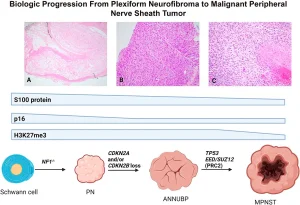
To confirm the diagnosis, a biopsy is usually required. This involves removing a small sample of tissue from the tumor for laboratory testing. In some cases, the tissue can be collected using a needle inserted through the skin into the tumor. In other situations, a surgical procedure may be needed to obtain an adequate sample. Laboratory analysis identifies whether the tissue is cancerous and provides detailed information about the tumor cells, which guides treatment planning.
Treatment
Treatment for malignant peripheral nerve sheath tumors typically involves a combination of approaches tailored to the tumor’s size, location, and spread.
Surgery is often the main treatment. The goal is to remove the tumor along with a margin of healthy tissue. When complete removal is not possible, surgeons may remove as much of the tumor as they can. Depending on the tumor’s location, surgery may carry a risk of nerve damage. Tumors in the arms or legs may, in rare cases, require removal of the affected limb to control the cancer.
Radiation therapy may be used before surgery to shrink the tumor, which can increase the chance of complete removal. After surgery, radiation may be recommended to destroy any remaining cancer cells. Radiation therapy uses high-energy beams, such as X-rays or protons, delivered precisely to the affected area.
Chemotherapy may be considered when the tumor has spread to other parts of the body. While it may not cure the cancer, chemotherapy can help control symptoms and slow tumor growth.
Rehabilitation is an important part of recovery, especially after surgery. Physical therapists and occupational therapists help patients regain movement and function that may be affected by nerve damage or surgical removal of tissue, including cases involving arm or leg amputation.
Advertisement
