
Overview
Diagnosis
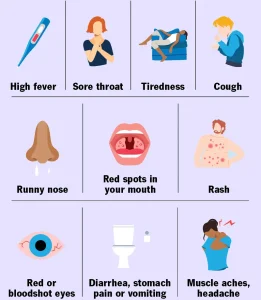
Measles may be diagnosed by a healthcare professional based on the appearance of the rash and the presence of tiny white spots inside the mouth, known as Koplik spots. The healthcare team may ask whether you or your child has received the measles vaccine, traveled to areas where measles is spreading, or been in contact with someone who had a fever or rash.
Laboratory tests can confirm measles. These tests may detect genetic material from the virus or proteins made by the body in response to infection. To collect samples, a healthcare professional may use a swab from the nose or throat. A urine or blood sample also may be required.
Treatment
There is no antiviral medicine that cures measles. Treatment focuses on relieving symptoms, reducing the risk of complications and preventing severe outcomes.
Care options after measles exposure
People older than 6 months who are exposed to measles and are not immune through prior illness or vaccination may receive the measles vaccine within three days of exposure. After vaccination, quarantine is not required.
Children up to 11 months old who are exposed and not immune may receive an injection of antibodies known as immune globulin for up to six days after exposure. After receiving immune globulin, quarantine is recommended for 21 days.
Measles care tips
Rest and proper nutrition are important during recovery. To reduce the risk of dehydration, drinking fluids is essential. Water, broth or rehydration solutions that contain minerals may help maintain fluid balance. A healthcare professional should be consulted before giving rehydration fluids to infants.
For fever and body aches, certain nonprescription medicines may help. Medication labels should be followed carefully, or dosing guidance should be obtained from a healthcare professional or pharmacist. Aspirin should not be given to children or teenagers, as it has been linked to Reye’s syndrome, a rare but life-threatening condition in young people with viral illnesses.
Care for measles complications
If measles leads to a bacterial infection such as pneumonia or an ear infection, antibiotics may be needed. Antibiotics do not treat the measles virus itself.
Measles can cause inflammation of the airways, which may reduce oxygen levels in the body. In these cases, extra oxygen or breathing support may be required.
Healthcare professionals may give vitamin A to children diagnosed with measles. The dose depends on the child’s age. Children with low vitamin A levels are at higher risk of severe illness from measles. Vitamin A does not prevent measles, and vaccination remains the most effective prevention method. Vitamin A supplements should only be given when recommended by a healthcare professional, as excessive intake can be harmful.
These supportive treatments are well researched and help improve comfort, manage complications and reduce the risk of death.
Other treatments with limited evidence
Some treatments proposed for measles have limited evidence and may carry risks. Steroid treatment has not shown consistent benefit and may worsen illness in some individuals. In certain cases, steroids may be considered only for people at high risk of severe disease or those who are critically ill. A qualified healthcare professional can explain possible risks and benefits based on individual circumstances.
Advertisement
