
Overview
Diagnosis
To determine a diagnosis and check for related complications, a healthcare provider may recommend several steps to better understand your symptoms and overall health.
This often begins with a physical exam. The doctor tries to rule out physical conditions that may be causing or contributing to mental health symptoms.
Lab tests may also be suggested. These can include checks such as thyroid function tests or screening for alcohol and drug use, depending on symptoms and medical history.
A psychological evaluation is another important part of diagnosis. A doctor or mental health professional talks with you about your symptoms, thoughts, feelings and behavior patterns. You may be asked to complete a questionnaire to help provide more detailed information.
Determining Which Mental Illness You Have
Identifying the exact mental illness can sometimes be challenging. Many conditions share similar symptoms, and people may experience more than one disorder at the same time.
Taking the time to get an accurate diagnosis is important because it helps guide the most appropriate treatment. The more information available, the better prepared you and your mental health professional will be to understand what your symptoms represent.
Mental health professionals rely on the Diagnostic and Statistical Manual of Mental Disorders (DSM-5), published by the American Psychiatric Association. This manual outlines defining symptoms for each mental condition and is widely used for diagnosis and treatment planning, as well as by insurance providers.
Classes of Mental Illness
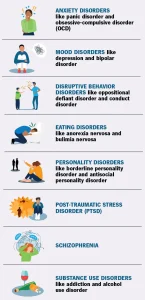
Mental illnesses are grouped into broad classes based on symptoms and characteristics.
-
Neurodevelopmental disorders
These usually begin in infancy or childhood, often before school age. Examples include autism spectrum disorder, attention-deficit/hyperactivity disorder (ADHD) and learning disorders. -
Schizophrenia spectrum and other psychotic disorders
These disorders involve detachment from reality, such as hallucinations, delusions and disorganized thinking or speech. Schizophrenia is the most well-known example. -
Bipolar and related disorders
These conditions involve alternating episodes of mania, marked by high energy and activity, and episodes of depression. -
Depressive disorders
These affect mood and emotional well-being and can interfere with daily functioning. Examples include major depressive disorder and premenstrual dysphoric disorder. -
Anxiety disorders
Anxiety disorders involve excessive worry and fear about future events. They may include behaviors intended to avoid anxiety-provoking situations. Common examples are generalized anxiety disorder, panic disorder and phobias. -
Obsessive-compulsive and related disorders
These disorders involve persistent thoughts or urges and repetitive behaviors. Examples include obsessive-compulsive disorder, hoarding disorder and hair-pulling disorder. -
Trauma- and stressor-related disorders
These occur after exposure to a stressful or traumatic event and involve difficulty coping. Examples include post-traumatic stress disorder and acute stress disorder. -
Dissociative disorders
These affect a person’s sense of identity, memory or awareness. Examples include dissociative identity disorder and dissociative amnesia. -
Somatic symptom and related disorders
These involve physical symptoms that cause significant emotional distress or impairment. The emotional response to the symptoms is disproportionate, whether or not another medical condition is present. -
Feeding and eating disorders
These disorders involve disturbances in eating behavior that affect nutrition and health, such as anorexia nervosa and binge-eating disorder. -
Elimination disorders
These relate to inappropriate elimination of urine or stool, either involuntary or intentional. Bed-wetting is a common example. -
Sleep-wake disorders
These disorders are severe sleep problems requiring clinical attention, including insomnia, sleep apnea and restless legs syndrome. -
Sexual dysfunctions
These involve problems with sexual response, desire or satisfaction, such as premature ejaculation or female orgasmic disorder. -
Gender dysphoria
This refers to distress related to a mismatch between a person’s experienced gender and assigned sex at birth. -
Disruptive, impulse-control and conduct disorders
These involve problems regulating emotions and behavior, such as intermittent explosive disorder or kleptomania. -
Substance-related and addictive disorders
These include disorders related to the excessive use of alcohol, tobacco, caffeine, drugs or behaviors such as gambling. -
Neurocognitive disorders
These disorders affect thinking, memory and reasoning. Examples include delirium and neurocognitive disorders caused by traumatic brain injury or Alzheimer’s disease. -
Personality disorders
These involve long-term patterns of behavior and emotional responses that affect relationships and daily life, such as borderline, antisocial and narcissistic personality disorders. -
Paraphilic disorders
These involve sexual interests that cause personal distress, impairment or potential harm to others. -
Other mental disorders
This group includes disorders related to other medical conditions or those that do not fully meet criteria for a specific category.
Treatment
Treatment depends on the type of mental illness, symptom severity and what works best for the individual. In many cases, combining different treatment approaches leads to better outcomes.
For mild mental illness with well-controlled symptoms, care from a primary care provider may be sufficient. More severe conditions often require a team-based approach to address medical, psychological and social needs.
Your Treatment Team
Depending on your situation, your care team may include:
-
Family or primary care doctor
-
Nurse practitioner or physician assistant
-
Psychiatrist
-
Psychotherapist, such as a psychologist or licensed counselor
-
Pharmacist
-
Social worker
-
Family members or caregivers
Medications
Psychiatric medications do not cure mental illness, but they can significantly reduce symptoms and improve daily functioning. They often make other treatments, such as psychotherapy, more effective.
Common classes of psychiatric medications include:
-
Antidepressants
Used to treat depression, anxiety and other conditions. They help improve mood, energy, concentration and interest in activities and are not addictive. -
Anti-anxiety medications
Used to treat anxiety disorders and reduce agitation or insomnia. Some fast-acting medications are intended for short-term use due to the risk of dependency. -
Mood stabilizers
Commonly used for bipolar disorders to help control mood swings between mania and depression. -
Antipsychotic medications
Used to treat psychotic disorders such as schizophrenia and sometimes bipolar disorder or severe depression.
Psychotherapy
Psychotherapy, also known as talk therapy, involves discussing your condition with a trained mental health professional. It helps you understand your thoughts, emotions and behaviors and develop coping strategies.
There are many types of psychotherapy, and treatment may be short-term or long-term depending on your needs. Therapy can take place individually, in groups or with family members.
Choosing a therapist you feel comfortable with is important. A strong therapeutic relationship helps ensure that your experiences and concerns are understood.
Brain-Stimulation Treatments
Brain-stimulation therapies may be considered for depression and other conditions when medications and psychotherapy have not been effective. These treatments include electroconvulsive therapy, repetitive transcranial magnetic stimulation, deep brain stimulation and vagus nerve stimulation.
Understanding the risks and benefits of each option is essential before starting treatment.
Hospital and Residential Treatment Programs
In severe cases, mental illness may require care in a psychiatric hospital or residential setting. This is usually recommended when a person cannot care for themselves or is at risk of harming themselves or others.
Options can include inpatient care, partial hospitalization, residential treatment or intensive outpatient programs.
Substance Misuse Treatment
Substance use issues often occur alongside mental illness and can complicate treatment. If stopping drug or alcohol use is difficult, specialized treatment may be necessary. A healthcare provider can guide you toward appropriate options.
Participating in Your Own Care
Treatment decisions are ideally made collaboratively between you and your healthcare provider. Factors such as symptom severity, personal preferences and medication side effects all play an important role.
In some cases, symptoms may be so severe that a doctor or loved one temporarily helps guide care until you are able to participate fully in decision-making.
Advertisement
