
Overview
Diagnosis
Diagnosis of mesothelioma often begins with a physical examination. A healthcare professional checks for lumps, fluid buildup or other signs that may suggest mesothelioma.
Imaging tests are commonly used to look more closely at areas where mesothelioma is suspected. These may include a chest X-ray and a CT scan of the chest or abdomen.
Based on the results of these initial tests, further evaluation may be needed to determine whether mesothelioma or another condition is causing the symptoms.
Biopsy
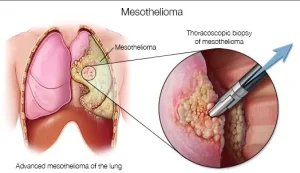
A biopsy is the only test that can confirm or rule out mesothelioma. This procedure involves removing a sample of tissue and examining it in a laboratory. The biopsy method depends on the location of the suspected cancer.
Biopsy procedures may include:
-
Needle biopsy
A healthcare professional inserts a thin needle through the skin to remove fluid or a small tissue sample from the chest or abdomen. -
Surgical biopsy
A surgeon may collect fluid or tissue samples during surgery. This often involves making a small incision and inserting a thin tube with a camera to see inside the chest or abdomen. Special tools are passed through the tube to collect tissue.
The tissue sample is analyzed in a laboratory to determine whether mesothelioma cells are present.
Finding the Extent of the Cancer
After mesothelioma is confirmed, additional tests are used to determine whether the cancer has spread to lymph nodes or other parts of the body.
Tests may include:
-
CT scans of the chest and abdomen
-
MRI scans
-
Positron emission tomography scans
The results help determine the stage of the cancer. Staging helps guide treatment decisions.
Mesothelioma Stages
Pleural mesothelioma is staged from 1 to 4.
Stage 1 indicates cancer limited to the lining around the lungs. As the cancer grows and spreads to nearby lymph nodes or other organs, the stage number increases. Stage 4 mesothelioma means the cancer has spread to distant areas of the body.
Other types of mesothelioma do not have formal staging systems.
Treatment
Treatment for mesothelioma depends on overall health, the cancer stage and where the cancer is located.
Mesothelioma often spreads quickly, and for most people there is no cure. It is commonly diagnosed at a stage when surgery cannot remove all of the cancer. Treatment often focuses on controlling the disease and relieving symptoms.
Discussing treatment goals with the healthcare team is important. Some people prefer aggressive treatment, even with significant side effects, while others focus on comfort and quality of life.
Surgery
Surgery may be an option when mesothelioma is diagnosed early. In rare cases, it may remove all detectable cancer.
More often, surgery cannot remove all cancer and is used to reduce symptoms.
Surgical options may include:
-
Surgery to reduce fluid buildup
Fluid may collect in the chest and cause breathing problems. Surgeons place a tube to drain the fluid and may use medication to prevent it from returning. This procedure is known as pleurodesis. -
Surgery to remove tissue around the lungs
Removal of the lining of the lungs and ribs, called pleurectomy, may help ease symptoms but does not cure the cancer. -
Surgery to remove a lung and surrounding tissue
Removing the affected lung and nearby tissue may reduce symptoms. This approach may allow higher doses of radiation after surgery. -
Surgery for peritoneal mesothelioma
Surgeons may remove as much visible cancer as possible from the abdomen. Chemotherapy may be given before or after surgery.
Chemotherapy
Chemotherapy uses strong medicines to kill cancer cells. It may be given before surgery to shrink cancer or used alone when surgery is not possible.
For peritoneal mesothelioma, heated chemotherapy may be delivered directly into the abdomen. This approach is known as hyperthermic intraperitoneal chemotherapy.
Radiation Therapy
Radiation therapy uses high-energy beams to destroy cancer cells. It may be used after surgery to kill remaining cancer cells or before surgery to shrink tumors.
Radiation may also help relieve pain and other symptoms when surgery is not an option.
Immunotherapy
Immunotherapy helps the immune system recognize and attack cancer cells. Cancer cells can evade the immune response, and immunotherapy helps overcome this defense.
For mesothelioma, immunotherapy may be used after surgery or when surgery cannot be performed.
Targeted Therapy
Targeted therapy uses medicines that attack specific substances involved in cancer cell growth. By blocking these targets, the treatment can cause cancer cells to die.
In mesothelioma, targeted therapy may be combined with chemotherapy or used when other treatments have not been effective.
Clinical Trials
Clinical trials explore new treatments for mesothelioma. Participating in a trial may provide access to emerging therapies, though benefits are not guaranteed.
Joining a clinical trial also helps advance research and may improve future treatment options. Discuss available trials with your healthcare professional.
Treatment for Other Types of Mesothelioma
Pericardial mesothelioma and mesothelioma of the tunica vaginalis are rare. If these cancers are small and localized, surgery may be possible.
For advanced disease, no standard treatment exists. Healthcare professionals may recommend treatments focused on symptom relief and improving quality of life.
Advertisement
