
Overview
Diagnosis
Several foot conditions can cause symptoms similar to metatarsalgia, so identifying the exact source of pain is important. A healthcare professional will examine your foot while you are standing and sitting to assess pressure points, alignment and areas of tenderness.
You may be asked about your daily activities, footwear, exercise habits and lifestyle, as these factors can contribute to forefoot pain.
An X-ray may be recommended to check for a stress fracture or other structural foot problems that could be causing your symptoms.
Treatment
For many people, simple self-care measures are enough to relieve metatarsalgia symptoms.
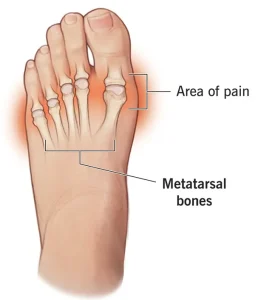
Common approaches include giving the foot time to rest, wearing shoes with better support and cushioning, or using arch supports. A metatarsal pad placed under the painful area of the foot can help reduce pressure on the metatarsal bones.
Surgery is rarely needed. It may be considered only if conservative treatments do not reduce pain and if there are underlying foot conditions, such as hammertoe, contributing to the problem.
Advertisement
