
Overview
Diagnosis
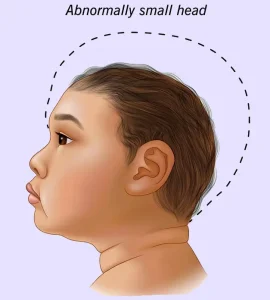
To determine whether a child has microcephaly, a healthcare provider collects detailed prenatal, birth and family medical history and performs a physical examination. A key part of the evaluation involves measuring the circumference of the child’s head and comparing it with standard growth charts.
The head measurement is repeated at future visits to track growth over time. In some cases, the head sizes of the parents may also be measured to determine whether small head size runs in the family.
If a child shows signs of delayed development or other concerns, additional testing may be recommended to help identify the underlying cause.
-
Imaging tests
A head CT scan or MRI may be ordered to examine the structure of the brain and look for abnormalities that could explain microcephaly or developmental delay. -
Blood tests
Blood tests may be performed to check for infections, genetic conditions or other medical issues that contribute to abnormal brain development.
Treatment
In most cases, there is no treatment that can increase head size or reverse the complications of microcephaly. An exception may be surgery for craniosynostosis, a condition in which the bones of the skull fuse too early.
Treatment mainly focuses on managing symptoms and supporting the child’s development. Early childhood intervention programs can play an important role in improving outcomes. These programs often include speech therapy, physical therapy and occupational therapy to help maximize a child’s abilities.
Medications may be recommended for certain complications associated with microcephaly, such as seizures or hyperactivity, depending on the child’s specific needs.
Advertisement
