
Overview
Diagnosis
Diagnosing microscopic colitis involves a complete medical history, a physical examination and appropriate testing. Your healthcare professional will review your symptoms, ask about medicines you take and check for other conditions that can cause long-lasting diarrhea, such as celiac disease.
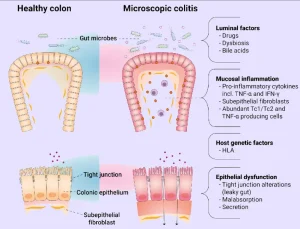
Because the colon often appears normal in people with microscopic colitis, the diagnosis cannot be made by visual inspection alone. Tissue samples from the colon are required and must be examined under a microscope to confirm the condition.
Tests
To confirm a diagnosis of microscopic colitis and rule out other causes of diarrhea, one or more of the following tests and procedures may be recommended.
-
Colonoscopy with biopsies
This test allows your healthcare professional to view the entire colon using a thin, flexible tube with a camera. During the procedure, small tissue samples are taken from the colon lining. These biopsy samples are examined under a microscope to look for changes seen in microscopic colitis. -
Flexible sigmoidoscopy with biopsies
This procedure is similar to a colonoscopy but examines only the rectum and the lower part of the colon. A lighted tube is used to view the intestinal lining, and tissue samples are taken for microscopic examination.
In both procedures, the colon lining may look typical, which is why biopsies are essential to make the diagnosis. Microscopic changes in colon tissue confirm the specific subtype of microscopic colitis.
-
Additional testing
Other tests may be done to exclude alternative causes of symptoms, including:-
Stool studies to rule out infections
-
Blood tests to look for anemia or signs of celiac disease
-
Upper endoscopy with biopsy to rule out celiac disease by examining the upper digestive tract
-
Treatment
Microscopic colitis may improve on its own. However, if symptoms are severe or persistent, treatment may be needed to control diarrhea and improve quality of life. Treatment usually starts with options that are least likely to cause side effects.
Diet and stopping certain medicines
Initial treatment often focuses on dietary changes and reviewing current medications that may trigger symptoms. Your healthcare professional may recommend the following steps.
-
Eat a low-fat, low-fiber diet to help reduce diarrhea in the short term
-
Limit foods that may worsen symptoms, such as dairy products, gluten, caffeine and sugar
-
Stop or switch medicines that may be contributing to symptoms, when possible
Medications
If symptoms continue despite dietary changes, medications may be prescribed to control inflammation and diarrhea.
-
Anti-diarrheal medicines such as loperamide or bismuth subsalicylate
-
Steroids such as budesonide to reduce inflammation in the colon
-
Bile acid–binding medicines such as cholestyramine or colestipol
-
Medicines that suppress the immune system, such as mercaptopurine or azathioprine
-
Biologic medicines that target inflammation, including infliximab, adalimumab or vedolizumab
Surgery
Surgery is rarely needed for microscopic colitis. In very severe cases where symptoms do not improve with medicines, surgery to remove part or all of the colon may be considered.
Advertisement
