
Overview
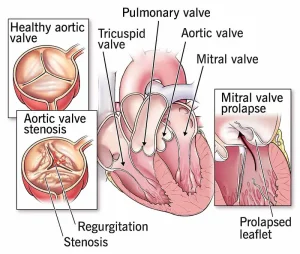
Diagnosis
To diagnose mitral valve disease, including mitral valve stenosis and mitral valve regurgitation, a health care professional begins with a physical examination and questions about your medical history. Listening to your heart with a stethoscope may reveal a whooshing sound, known as a heart murmur, which can indicate a mitral valve problem.
Tests commonly used to diagnose mitral valve disease include:
Echocardiogram. This test uses sound waves to create moving images of the heart. It shows how blood flows through the heart and valves, helping identify congenital mitral valve disease, rheumatic disease, and other valve conditions. A standard echocardiogram is done outside the body, while a transesophageal echocardiogram provides a closer, more detailed look from inside the body.
Electrocardiogram (ECG or EKG). This quick test measures the heart’s electrical activity and shows how fast or slow the heart is beating. Sensors are placed on the chest and sometimes the arms and legs to record heart rhythms.
Chest X-ray. A chest X-ray shows images of the heart and lungs. It can detect an enlarged heart, which may indicate valve disease.
Cardiac MRI. Magnetic fields and radio waves create detailed pictures of the heart. This test helps determine how severe the mitral valve disease is.
Exercise or stress tests. These tests monitor the heart during physical activity, such as walking on a treadmill or cycling. They help show how the heart responds to exertion and whether symptoms appear. Medicines may be used to mimic exercise if you cannot exercise.
Cardiac catheterization. A thin tube is guided through a blood vessel to the heart, and dye is injected to highlight the arteries on X-ray. Although not commonly used for diagnosing mitral valve disease, it may be done if other tests are unclear or to check for coronary artery disease.
Staging
Once mitral valve disease is diagnosed, your care team may determine the disease stage. Staging helps guide the most appropriate treatment plan. It considers symptoms, severity, valve structure, and blood flow through the heart and lungs.
Heart valve disease is categorized into four stages:
• Stage A: At risk due to the presence of factors that could lead to valve disease.
• Stage B: Progressive disease that is mild or moderate without symptoms.
• Stage C: Severe disease that remains asymptomatic.
• Stage D: Severe disease that causes symptoms.
Treatment
Treatment for mitral valve disease depends on symptoms, disease severity, and whether the condition is worsening. A cardiologist typically manages care and may recommend regular checkups to monitor your condition. If you have mitral valve disease, you may be advised to:
• Make healthy lifestyle changes
• Take medications to manage symptoms
• Use blood thinners if you have atrial fibrillation to reduce the risk of blood clots
Surgery or other procedures
A damaged or diseased mitral valve may eventually require repair or replacement, even without symptoms. If you are having surgery for another heart condition, valve repair or replacement may be performed at the same time. Some medical centers offer robot-assisted minimally invasive surgery using advanced robotic arms.
Mitral valve repair procedures may include:
• Patching holes in the valve
• Reconnecting valve flaps
• Removing extra tissue to allow the flaps to close properly
• Repairing supporting cords
• Separating fused valve leaflets
Other repair options include:
• Annuloplasty to tighten or reinforce the ring around the valve
• Valvuloplasty to widen a narrowed valve opening using a balloon catheter
• Mitral valve clip placement for severe regurgitation, especially for those who are not good surgical candidates
During mitral valve replacement, the surgeon removes the damaged valve and replaces it with a mechanical or biological tissue valve made from cow, pig, or human tissue. If a biological tissue valve wears out, a valve-in-valve catheter procedure may be used to replace it. Mechanical valves require lifelong blood thinners, while biological valves eventually need replacement.
Advertisement
