
Overview
Diagnosis
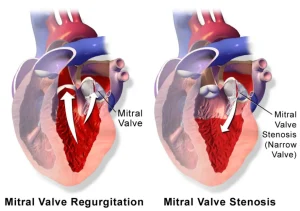
To diagnose mitral valve stenosis, a healthcare professional performs a physical exam and reviews your symptoms, medical history and family history. A stethoscope is used to listen to the heart and lungs. The narrowed mitral valve often creates an irregular sound called a heart murmur. Fluid buildup in the lungs also may be detected. If symptoms suggest mitral valve stenosis, further testing is done to examine the heart.
Tests
Imaging tests help confirm mitral valve stenosis, determine its cause and guide treatment decisions. Tests may include:
Echocardiogram. This test uses sound waves to create images of the heart. It shows blood flow patterns, valve changes and the severity of stenosis. People with very severe mitral stenosis typically need an echocardiogram every year, while those with less severe disease need one every 3 to 5 years.
Electrocardiogram (ECG or EKG). Sensors placed on the chest, arms and legs record the heart’s electrical activity. This test shows how the heart is beating.
Chest X-ray. A chest X-ray shows the condition of the heart and lungs. It can reveal an enlarged heart or other signs of valve disease.
Exercise stress tests. These tests involve walking on a treadmill or riding a stationary bike to show how the heart responds to physical activity and whether symptoms appear. Medicines may be used if exercise is not possible.
Cardiac CT. Multiple X-ray images form a detailed view of the heart and valves. This test is often used to assess mitral stenosis not related to rheumatic fever.
Cardiac MRI. Magnetic fields and radio waves create detailed heart images. A cardiac MRI may determine how severe the stenosis is.
Cardiac catheterization. This test is used if other tests cannot confirm the diagnosis or determine severity. A catheter is inserted into a blood vessel and guided to the heart, where dye is injected to help visualize the arteries on X-ray.
Staging
Once mitral valve stenosis or another valve condition is confirmed, the stage of heart valve disease is determined. Staging helps identify the best treatment approach. Stages are based on symptoms, disease severity, valve structure and blood flow through the heart and lungs.
Heart valve disease is divided into four stages:
• Stage A: At risk due to the presence of factors that may lead to valve disease
• Stage B: Progressive valve disease that is mild or moderate without symptoms
• Stage C: Asymptomatic severe disease
• Stage D: Symptomatic severe disease
Treatment
Treatment for mitral valve stenosis may include medicine, valve repair or replacement surgery, or open-heart surgery. If the condition is mild to moderate and without symptoms, regular monitoring may be all that is needed. A cardiologist typically provides ongoing care.
Medications
Medicines may be used to reduce symptoms and prevent complications. These may include:
• Diuretics to reduce fluid buildup in the lungs or body
• Anticoagulants to prevent blood clots if atrial fibrillation is present
• Beta blockers, calcium channel blockers or other medicines to slow the heart rate
• Antiarrhythmics to treat irregular heartbeats
• Antibiotics to prevent recurrence of rheumatic fever if it caused the valve damage
Surgery or other procedures
A damaged mitral valve may eventually need repair or replacement, even without symptoms. If another heart surgery is needed, mitral valve treatment may be done at the same time. Treatment options include:
Balloon valvuloplasty. A catheter with a balloon at the tip is inserted into an artery and guided to the mitral valve. The balloon is inflated to widen the opening, then deflated and removed. This procedure may be done even without symptoms, but not everyone is a candidate.
Open-heart valve repair. If catheter-based treatment is not an option, surgical commissurotomy may be performed to remove calcium and scar tissue blocking the valve. The heart is stopped during this surgery and supported by a heart-lung machine. Repeat procedures may be needed if stenosis returns.
Mitral valve replacement. If the valve cannot be repaired, it can be replaced with a mechanical valve or a biological tissue valve made from cow, pig or human heart tissue. Biological valves wear down over time and require replacement, while mechanical valves require lifelong blood thinners. Your healthcare team helps you determine the best option.
The outlook after catheter treatment or surgery is generally good. However, older age, poor overall health, extensive calcium buildup and long-standing pulmonary hypertension can increase surgical risk and affect long-term results.
Advertisement
