
Overview
Diagnosis
Mononucleosis is usually suspected based on your symptoms, their duration, and a physical exam. During the exam, your doctor may look for:
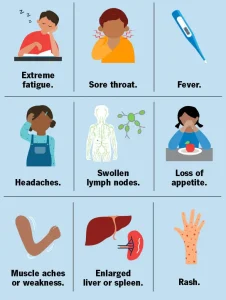
• Swollen lymph nodes
• Enlarged tonsils
• Swelling of the liver or spleen
Additional tests can help confirm the diagnosis:
• Antibody tests such as the monospot test, which checks for antibodies to the Epstein-Barr virus and usually provides results within a day. Some antibody tests can detect the infection even during the first week of symptoms but take longer to process
• White blood cell count to detect elevated lymphocytes or abnormal-looking lymphocytes, which can suggest mononucleosis but do not confirm it
Treatment
There is no specific therapy to cure infectious mononucleosis. Treatment focuses on relieving symptoms and supporting your body while it fights the virus. General care includes:
• Getting plenty of rest
• Eating a balanced, healthy diet
• Drinking enough fluids
• Using over-the-counter pain relievers to reduce fever or ease a sore throat
Medications may be used in certain situations:
• Antibiotics for secondary bacterial infections such as strep throat, sinus infections, or tonsillitis
• Corticosteroids for severe airway swelling
Some antibiotics, including amoxicillin and other penicillin-based drugs, are not recommended for people with mononucleosis because they may cause a rash. This rash does not necessarily indicate an allergy. Alternative antibiotics are available if needed to treat bacterial infections alongside mononucleosis.
Supportive care and monitoring usually lead to full recovery, with most symptoms gradually improving over several weeks.
Advertisement
