
Overview
Diagnosis
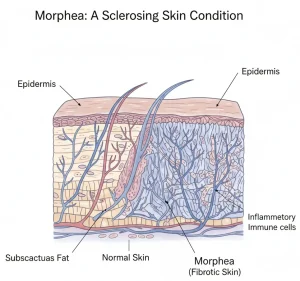
Your doctor can diagnose morphea by examining the affected skin and reviewing your signs and symptoms. A skin biopsy may be performed to examine a small sample of skin in a laboratory. This can reveal changes such as thickening of collagen in the dermis, the second layer of skin. Collagen is a key component of connective tissues, providing elasticity and resilience to your skin.
To distinguish morphea from systemic scleroderma or other conditions, your doctor may order blood tests or refer you to a dermatologist or rheumatologist.
For children with head and neck morphea, regular comprehensive eye exams are recommended to prevent unnoticed eye damage. Ultrasound and magnetic resonance imaging (MRI) may also be used to monitor disease progression and response to treatment.
Treatment
Morphea often resolves on its own over several years, but treatment can help manage symptoms and prevent complications. Treatment options depend on the severity and location of the condition:
• Medicated creams
-
Vitamin D creams, such as calcipotriene, may soften skin patches. Side effects can include burning, stinging, or a rash.
-
Corticosteroid creams can reduce inflammation but may thin the skin with long-term use.
• Light therapy
-
Ultraviolet light (phototherapy) can be used for severe or widespread morphea.
• Oral medications
-
Immunosuppressive drugs like methotrexate or corticosteroid pills may be prescribed for severe cases.
-
Hydroxychloroquine or mycophenolate mofetil may also be considered. Each medication carries potential side effects, so discuss risks and benefits with your doctor.
• Physical therapy
-
If joints are affected, physical therapy can help preserve range of motion and maintain function.
Treatment aims to control symptoms and prevent long-term skin changes or joint limitations.
Advertisement
