
Overview
Diagnosis
Your healthcare provider can usually diagnose mosquito bites by examining the affected skin and discussing your recent outdoor activities.
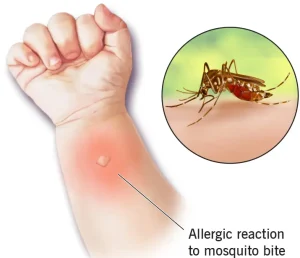
Large, inflamed, itchy, or painful swelling may indicate skeeter syndrome, an allergic reaction to proteins in mosquito saliva. This can sometimes be mistaken for a bacterial infection. There is no simple blood test for mosquito antibodies, so diagnosis is mainly based on the appearance of the bite and its timing relative to mosquito exposure.
Treatment
Most mosquito bites heal on their own within a few days. Self-care strategies can help relieve discomfort:
• Apply a lotion, cream, or paste. Calamine lotion, nonprescription antihistamine creams, or corticosteroid creams can reduce itching. A paste made from baking soda and water may also help. Reapply up to three times a day until symptoms improve.
• Rub with an ice cube. Gently rub an ice cube on the bite for about 30 seconds to ease itching.
• Apply pressure. Pressing on the bite for 10 seconds may provide temporary relief.
• Take an oral antihistamine. Nonprescription, nonsedating antihistamines such as cetirizine or loratadine can help manage stronger reactions.
Most people do not need to see a doctor for a mosquito bite unless a fever, signs of infection, or other unusual symptoms develop.
Treatment focuses on reducing itching, preventing scratching, and managing allergic reactions.
Advertisement
