
Overview
Diagnosis
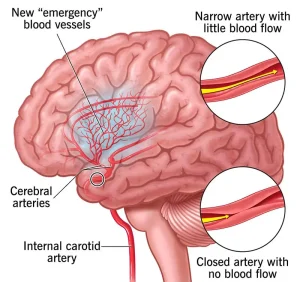
Moyamoya disease is usually diagnosed by a neurologist who specializes in brain conditions. The neurologist reviews your symptoms, medical history, and family history, and may perform a physical exam. Several tests are typically needed to confirm the diagnosis and assess underlying conditions.
Tests may include:
• Magnetic resonance imaging (MRI) and magnetic resonance angiogram to view blood circulation in the brain
• Perfusion MRI to measure blood flow and detect reduced supply to the brain
• Computerized tomography (CT) scan or CT angiogram to highlight blood flow in arteries and veins
• Cerebral angiogram, using a catheter and dye to visualize blood vessels in the brain
• Positron emission tomography (PET) or single-photon emission computerized tomography (SPECT) to evaluate brain activity and blood flow
• Electroencephalogram (EEG) to monitor electrical activity in the brain
• Transcranial Doppler ultrasound to assess blood flow in the neck and head
Additional tests may be ordered to rule out other conditions.
Treatment
Treatment for moyamoya disease aims to reduce symptoms, improve blood flow to the brain, and lower the risk of complications such as stroke or brain hemorrhage.
Treatment options include:
Medicine
• Blood thinners like aspirin to prevent strokes in people with mild or no symptoms
• Calcium channel blockers to manage headaches, transient ischemic attack symptoms, and blood pressure
• Anti-seizure medicines for those who have experienced seizures
Surgery
Early surgical intervention can slow disease progression. Revascularization surgery is used to bypass blocked arteries and restore blood flow.
• Direct revascularization connects a scalp artery directly to a brain artery for immediate blood flow
• Indirect revascularization procedures, including EDAS and EMS, gradually increase blood flow by placing arteries or muscles onto the brain surface
• Combined procedures may be used in adults for optimal results
Surgery may also address brain aneurysms if they develop. Possible risks include headaches, bleeding, or seizures, but benefits typically outweigh these risks.
Therapy
• Physical and occupational therapy to regain function after a stroke
• Cognitive behavioral therapy and psychiatric support to address emotional and cognitive challenges caused by moyamoya disease
Treatment is personalized based on the severity of the disease, age, overall health, and response to interventions.
Advertisement
