
Overview
Diagnosis
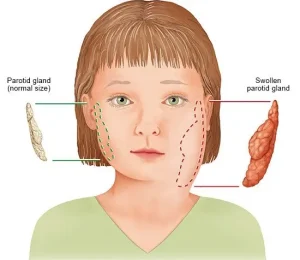
A healthcare provider may diagnose mumps based on typical symptoms and a known or suspected exposure to someone with the infection. Swollen salivary glands, especially near the jaw, are a common sign that helps guide diagnosis.
To confirm the diagnosis or detect the virus, the provider may recommend one or more tests, including:
-
A test of a sample collected from the mouth
-
A blood test that shows how the immune system is responding to the virus
-
A urine sample test, which is used less often
These tests help support the diagnosis and rule out other conditions that may cause similar symptoms.
Treatment
There is no specific treatment to cure mumps. Most people recover fully within about 3 to 10 days. Treatment focuses on relieving symptoms and supporting recovery.
Steps that may help reduce discomfort and aid healing include:
-
Resting until symptoms improve
-
Using over-the-counter pain relievers such as ibuprofen or acetaminophen
-
Applying a cold or warm cloth to swollen salivary glands
-
Using a cold cloth or ice pack for swollen testicles
-
Drinking plenty of fluids to stay hydrated
To prevent spreading the infection, it is important to isolate yourself or your child during the illness. Avoid close contact with others for at least five days after swelling of the salivary glands begins.
Preparing for your appointment
If you think you or your child has mumps, contact your healthcare provider for guidance. Preparing in advance can help make the appointment more effective.
What you can do
Before the appointment, consider writing down:
-
Symptoms you or your child have had and how long they’ve lasted
-
Any known exposure to someone with mumps in recent weeks
-
A list of all medicines, vitamins, or supplements being taken
-
Key medical history, including other diagnosed conditions
-
Important personal information, such as recent stress or life changes
-
Questions you would like to ask the healthcare provider
Questions to ask your healthcare provider
You may want to ask:
-
What is the most likely cause of these symptoms
-
Which treatment approach is recommended
-
How soon symptoms should begin to improve
-
Whether there are home care steps to help relieve symptoms
-
Whether you or your child is contagious and for how long
-
How to reduce the risk of spreading the infection to others
During the appointment, feel free to ask any additional questions that come to mind.
What to expect from your healthcare provider
The provider may ask questions such as:
-
What symptoms have been experienced and when they began
-
When facial swelling was first noticed
-
Whether there is pain and where it is located
-
Any recent exposure to someone with mumps
-
Vaccination history
-
Whether anyone else in the household has symptoms
-
Which medicines, vitamins, or supplements are used regularly
Being prepared helps ensure clear communication and appropriate care.
Advertisement
