
Overview
Diagnosis
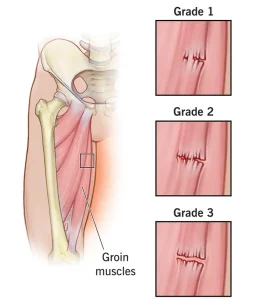
Muscle strains are usually diagnosed with a physical examination. During the exam, your doctor checks the injured area for swelling and points of tenderness. The location, severity, and type of pain help determine how extensive the injury is.
In more serious injuries, where a muscle or tendon may be completely torn, your doctor may be able to see or feel a gap or defect at the site of injury. Imaging tests such as ultrasound are often used to tell the difference between various types of soft tissue injuries and to assess the severity of the strain.
Treatment
Initial treatment for a muscle strain focuses on reducing pain and swelling and protecting the injured muscle. Immediate self-care often includes the R.I.C.E. approach.
Rest
Avoid activities that increase pain, swelling, or discomfort. However, complete inactivity is usually not recommended, and gentle movement may be encouraged as pain improves.
Ice
Apply ice or a cold pack to the injured area as soon as possible. Use ice for about 15 to 20 minutes at a time, every two to three hours while awake, for the first few days after the injury.
Compression
Wrap the injured area with an elastic bandage to help limit swelling. The bandage should be snug but not tight enough to reduce blood flow. Loosen the wrapping if pain worsens, numbness develops, or swelling appears below the wrapped area.
Elevation
Keep the injured area raised above heart level whenever possible, especially at night, to help reduce swelling.
Pain relief
Some healthcare professionals recommend avoiding anti-inflammatory pain medicines such as aspirin, ibuprofen, and naproxen during the first 48 hours because they may increase the risk of bleeding. Acetaminophen may be used for pain relief during this time.
Recovery and rehabilitation
Physical therapy may be recommended to restore strength, flexibility, and stability to the injured muscle or joint. In some cases, immobilization with a brace or splint may be necessary.
For severe injuries, such as a completely torn tendon, surgical treatment may be considered.
Preparing for your appointment
You may first see your family physician, who may refer you to a specialist in sports medicine or orthopedic surgery if needed.
What you can do
Preparing a list before your appointment can be helpful, including:
-
A detailed description of your symptoms
-
Information about previous medical problems
-
Family history of medical conditions
-
A list of all medicines and dietary supplements you take
-
Questions you want to ask your doctor
What to expect from your doctor
Your doctor may ask questions such as:
-
How the injury occurred and what movement caused it
-
Whether you heard or felt a popping or snapping sensation
-
When the injury happened
-
Which home treatments you have tried
-
Whether you have injured this area before and how it happened
Being prepared helps your healthcare provider make an accurate diagnosis and recommend appropriate treatment.
Advertisement
