
Overview
Diagnosis
Diagnosis of myelofibrosis usually begins with a physical examination and a review of symptoms. Additional tests are often needed to confirm this type of bone marrow cancer. These may include blood tests, imaging studies, and bone marrow testing.
A healthcare professional may examine your abdomen to check for signs of an enlarged spleen or liver, which are common findings in myelofibrosis.
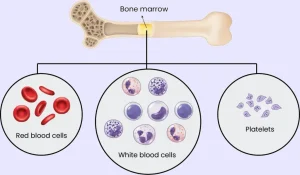
Blood tests are an important part of diagnosis. A complete blood count is commonly used to measure the number of different blood cells. In people with myelofibrosis, red blood cell counts are often low, leading to anemia. White blood cell and platelet levels may be higher or lower than normal.
Imaging tests create pictures of the inside of the body and help evaluate organ size and bone marrow changes. These tests are used to see whether the spleen or liver is enlarged and to look for evidence that scar tissue has replaced healthy bone marrow. Common imaging tests include CT scans and MRI scans.
A bone marrow aspiration and biopsy may be performed to collect samples of bone marrow for testing. Bone marrow contains both solid tissue and liquid. During aspiration, a needle is used to draw out the liquid portion. During biopsy, a small sample of solid tissue along with enclosed fluid is collected. These samples are usually taken from the hip bone. In people with myelofibrosis, the results often show scarring of the bone marrow.
If abnormal cells are found in the blood or bone marrow, they may be tested for changes in DNA. Identifying genetic changes helps confirm the diagnosis and guides treatment decisions. The most common genetic changes seen in myelofibrosis involve the JAK2, CALR, and MPL genes.
Treatment
Treatment for myelofibrosis focuses mainly on relieving symptoms and improving quality of life. Available options may include blood transfusions, medicines such as chemotherapy or targeted therapy, surgery to remove the spleen, radiation therapy, and bone marrow transplant. For some people, a stem cell transplant may offer a chance for cure, though it is not suitable for everyone due to its intensity and risks.
Healthcare professionals often use risk assessment tools to determine how advanced the disease is and which treatments may provide the most benefit. These assessments consider factors related to the cancer and overall health.
People with lower-risk myelofibrosis may have slow disease progression. Treatment may not be needed right away, and care may focus on monitoring and symptom control. Higher-risk myelofibrosis may worsen more quickly, and stronger treatment options may be considered.
Treatment may not be needed right away
If myelofibrosis is not causing symptoms, treatment may be delayed. Instead, healthcare professionals may closely monitor the condition through regular checkups and tests. Some people remain free of symptoms for many years without needing active treatment.
Treatments for anemia
When myelofibrosis causes severe anemia, treatment may be recommended to improve red blood cell levels. Options may include:
Blood transfusions
Medicines that stimulate blood cell production
Treatments for an enlarged spleen
An enlarged spleen may cause discomfort or complications. Treatment options aim to reduce spleen size and relieve symptoms and may include:
Targeted therapy
These medicines block specific chemical signals in cancer cells. In myelofibrosis, targeted therapies often focus on cells with JAK2 gene changes.
Chemotherapy
Strong medicines are used to slow the growth of cancer cells.
Surgery to remove the spleen
This procedure, known as splenectomy, may be considered if other treatments are not effective.
Radiation therapy
High-energy beams are used to shrink the spleen, especially when surgery is not an option.
Bone marrow transplant
A bone marrow transplant, also called a stem cell transplant, replaces damaged bone marrow cells with healthy stem cells from a donor. This is known as an allogeneic stem cell transplant.
Before receiving the transplant, chemotherapy or radiation therapy is used to destroy the diseased bone marrow. Healthy donor stem cells are then introduced into the body.
This treatment has the potential to cure myelofibrosis, but it carries a high risk of serious side effects. Because of these risks, it is only recommended for selected individuals.
Palliative care
Palliative care focuses on improving comfort and quality of life for people with serious illnesses such as cancer. It helps manage pain and other symptoms and provides emotional and practical support.
A palliative care team may include doctors, nurses, and other trained healthcare professionals. Palliative care can be given along with cancer treatments such as chemotherapy, surgery, or radiation therapy.
When used alongside standard treatments, palliative care can help people feel better and, in some cases, live longer.
Advertisement
