
Overview
Diagnosis
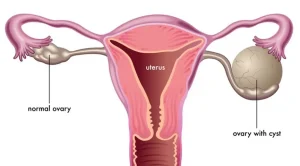
Ovarian cysts are often discovered during a routine pelvic exam or through imaging tests like a pelvic ultrasound. Depending on the cyst’s size, contents, and appearance, your healthcare provider may recommend further tests to determine its type and whether treatment is necessary.
Possible diagnostic tests include:
-
Pregnancy test: A positive result might indicate an early pregnancy, during which corpus luteum cysts are common and normal.
-
Pelvic ultrasound: This imaging test uses a wandlike device called a transducer to send and receive high-frequency sound waves, creating detailed images of the uterus and ovaries. It helps confirm the presence, location, and composition of the cyst — whether it’s fluid-filled or solid.
-
Laparoscopy: A minimally invasive procedure where a thin, lighted instrument called a laparoscope is inserted through a small incision in the abdomen. This allows your doctor to view your ovaries directly. If a cyst is found, it can often be treated during the same procedure.
-
Tumor marker tests: Blood tests such as the CA 125 test measure levels of a protein that can be elevated in ovarian cancer. These tests are usually recommended if the cyst appears solid or if you’re at higher risk of ovarian cancer. However, elevated CA 125 levels can also occur in noncancerous conditions like endometriosis or pelvic inflammatory disease.
Less common types of ovarian cysts can also develop and are often detected during pelvic exams. Because solid cysts that appear after menopause have a higher risk of being cancerous, regular pelvic checkups are essential for early detection and management.
Treatment
Treatment for ovarian cysts depends on several factors, including your age, the type and size of the cyst, and whether you experience symptoms.
Common treatment options include:
-
Watchful waiting: In many cases, your doctor may recommend waiting to see if the cyst resolves on its own after a few months. This approach is suitable if you have no symptoms and imaging shows a small, fluid-filled cyst. Regular follow-up ultrasounds are used to monitor any changes in size or appearance.
-
Medicine: Hormonal contraceptives, such as birth control pills, can help prevent the formation of new cysts by stopping ovulation. However, they do not shrink existing cysts.
-
Surgery: Surgical removal may be advised if the cyst is large, causes pain, appears abnormal, or continues to grow.
-
Cystectomy removes the cyst while preserving the ovary.
-
Oophorectomy involves removing the affected ovary along with the cyst.
-
Minimally invasive laparoscopic surgery is often preferred, but larger cysts or suspected cancer may require an open surgical procedure.
-
If an ovarian cyst develops after menopause, it may be cancerous. In such cases, you may be referred to a gynecologic oncologist. Treatment could include surgery to remove the uterus, cervix, fallopian tubes, and ovaries, followed by chemotherapy or radiation therapy if necessary.
Early diagnosis, regular follow-ups, and personalized treatment help ensure the best outcomes for ovarian cyst management and overall reproductive health.
Advertisement
